Global layout
 +86 769 2366 8529




Time:2026-07-17 Views:66
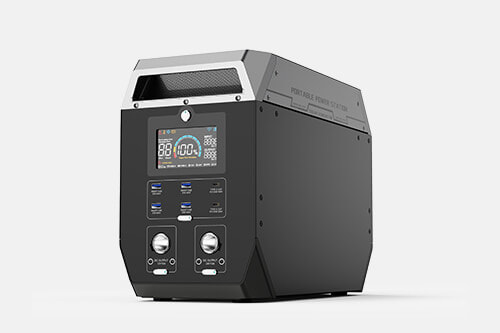
As a core energy storage device for outdoor camping, self-driving travel, home emergency backup and outdoor operations, the 600W power station has become a mainstream choice for consumer-grade outdoor power supplies due to its moderate rated power, portable body size and diverse output interfaces. Compared with heavy high-power power stations and low-performance small-power power supplies, the 600W power specification perfectly matches most daily outdoor power scenarios. It can stably drive various common electrical appliances such as electric rice cookers, kettles, car refrigerators, lighting equipment, digital devices and small tools, balancing practicality and portability. For camping enthusiasts, self-driving travelers, outdoor construction workers and users needing home emergency power, the battery life of the 600W power station directly determines the scenario experience and use value. However, most users encounter various battery life problems in actual use, including false battery life marking, sudden battery life attenuation, unbalanced battery life in high and low temperatures, insufficient endurance under high load, and delayed recharging speed. These problems seriously damage the outdoor power use experience and even cause sudden power outages and equipment shutdowns. This article deeply analyzes the full-scene battery life pain points and core causes of the 600W power station based on real usage scenarios, and provides targeted battery life optimization solutions combined with measured data, helping users completely get rid of battery life anxiety and maximize the energy storage value of the device.
False battery life marking and a huge gap between nominal capacity and actual battery life are the most common and core battery life pain points of the 600W power station. Most commercial 600W outdoor power stations are marked with rated capacities such as 288Wh, 296Wh and 300Wh, with ideal battery life parameters officially released, such as supporting 60W lighting equipment for 40 hours, 50W car refrigerators for 5 to 6 hours, and 600W full-power equipment for 1 hour with a full charge. Nevertheless, the actual battery life is far lower than the official promotional data in real outdoor use, and the actual available capacity of some inferior products is less than 70% of the nominal value, resulting in the embarrassing situation of "full charge but poor durability and fast power loss". Users often mistake this for equipment failure, but it is essentially a prevalent industry problem of false capacity marking and differentiated working condition marking. Manufacturers calculate battery life under ideal no-load and low-load environments, ignoring energy consumption losses in actual use, leading to a huge deviation between real user experience and publicity.
The core cause of false marking and actual battery life shrinkage lies in the objective energy conversion loss, which is an unavoidable basic problem for all 600W power stations and the fundamental reason for the gap between ideal and actual battery life. The 600W outdoor power station cannot supply power directly to devices. It needs an internal inverter system to convert direct current into 220V alternating current, and the entire inversion process generates fixed energy consumption loss. High-quality formal devices have an inverter conversion efficiency of 85%-90%, while inferior miscellaneous devices only achieve 70%-80%, meaning nearly 30% of power is lost during conversion and cannot be utilized by electrical equipment. Meanwhile, standby power consumption, line transmission loss and interface contact loss will further consume power. The superposition of multiple losses greatly reduces the actual available capacity and directly shortens the battery life duration. Most users are unaware of the conversion loss principle and estimate power duration based on official ideal data, eventually encountering frequent sudden power outages.
In addition, chaotic industry products exacerbate the problem of false battery life marking. The low market threshold for 600W power stations leads to a flood of inferior products, which reduce costs and attract consumers by falsely marking capacity, tampering with parameters and using refurbished battery cells. Regular 600W outdoor power stations adopt brand-new lithium iron phosphate cells with accurate capacity, stable discharge and controllable loss; while low-cost inferior products mostly use disassembled refurbished cells and low-end ternary lithium cells with inconsistent quality and weak energy storage capacity. Their battery life fails to meet the standard even in new condition, and the cell aging accelerates sharply after 1 to 3 months of use, resulting in a cliff-like decline in battery life. Moreover, some manufacturers mislead users by falsely marking peak power and confusing rated power with peak power. The 600W rated power device has a peak power of 1200W, but the peak power only supports instantaneous output rather than continuous discharge, causing rapid power loss and shutdown when users use full power, which is mistaken for battery life failure.
Sudden battery life attenuation and poor working condition adaptability in high and low temperature environments are frequent and easily overlooked battery life pain points of the 600W power station in outdoor scenarios. Different from constant-temperature indoor use, outdoor power scenarios are affected by seasonal temperature differences, day and night temperature differences and extreme weather, which greatly reduce the original stable battery life duration. High-temperature exposure in summer and low-temperature severe cold in winter are two major extreme scenarios that affect the battery life of 600W outdoor power stations and the main causes of outdoor power failure.
Low temperature in winter is the top killer of the 600W power station’s battery life. Measured data shows that when the ambient temperature is below 0℃, the activity of the internal lithium cells of the 600W outdoor power station decreases significantly, the internal resistance surges, and the power storage and discharge efficiency drops sharply, reducing the overall battery life by 30%-50%. In winter outdoor camping in northern regions and winter construction operations, a fully charged 600W power station that can originally support a car refrigerator for 5 hours can only work for 2 to 3 hours in low-temperature environments, and the charging times of digital devices are also greatly reduced. Meanwhile, the charging efficiency of the power station is extremely low in low temperatures, and the speed of solar and vehicle recharging drops sharply, even failing to charge, making it impossible to replenish power in a timely manner and further aggravating power shortage problems. In high-temperature summer scenarios, the continuous rise of the device body temperature triggers the temperature control protection mechanism, which actively limits discharge power and reduces output efficiency, not only shortening battery life but also causing high-temperature frequency reduction and automatic power-off protection, leading to sudden shutdown of electrical equipment.
Prominent high-load battery life shortcomings and insufficient full-power endurance duration are core pain points when the 600W power station is adapted to high-power equipment. Many users purchase 600W outdoor power stations to drive full-power equipment such as 600W kettles, small induction cookers and high-power tools, but find that the actual full-power continuous use duration is far lower than expected, and some equipment automatically shuts down or loses power severely after a few seconds of startup. Theoretically, the 600W rated power device can last about 1 hour at full power, but affected by conversion loss, body heat generation and voltage fluctuation, the actual full-power continuous use duration is only 40 to 50 minutes, failing to meet continuous high-power power demand. In addition, long-term high-load operation accelerates cell aging, resulting in obvious attenuation of subsequent light-load battery life and forming a vicious cycle.
Furthermore, unreasonable load matching and improper power usage habits artificially aggravate the battery life loss of the 600W power station and cause rapid battery life shrinkage. Most users connect multiple devices in parallel simultaneously, such as charging digital devices while driving lighting and small household appliances. Although the power of a single device is low, the superimposed total load greatly increases the discharge pressure of the power station, raises energy consumption loss and shortens the overall battery life. Frequent equipment start-stop and repeated plugging and unplugging of interfaces cause frequent high and low voltage switching of the power station, unstable cell discharge and increased invalid energy consumption, further wasting power. In addition, habits such as exhausting power before charging, long-term full-power storage and idle state without power supplement continuously damage cell activity, leading to annual attenuation of effective battery capacity and obvious decline in battery life after half a year to one year of use.
Low recharging efficiency and delayed battery life supply are key battery life pain points of the 600W power station in off-grid outdoor scenarios. In off-grid scenarios such as self-driving outdoor travel, wild camping and remote construction operations, exhausted power cannot be replenished in a timely manner, directly leading to power interruption. However, most 600W outdoor power stations suffer from slow recharging speed, low solar charging efficiency and insufficient vehicle charging power. Conventional 600W outdoor power stations require 3 to 4 hours for municipal power recharging, and some low-end versions even take 5 to 6 hours with low charging efficiency. Outdoor solar recharging is greatly affected by weather, light angle and time. The charging power drops sharply on cloudy and overcast days with almost no effective power supplement, and the charging speed in sunny strong light is far slower than the discharge speed, failing to realize simultaneous use and charging. Vehicle charging only supports low-speed driving energy supplement with limited power replenishment per trip, unable to quickly restore full power, and insufficient power supply efficiency greatly restricts the long-term off-grid use capability of the device.
Firmware and protection mechanism defects are recessive pain points causing abnormal battery life and excessive power loss of the 600W power station, which are rarely noticed by users. Some old firmware versions have power calculation bugs and inaccurate power display, resulting in virtual power and sudden power jump failure. The screen may show 50% remaining power, but the device shuts down instantly, causing the illusion of unstable battery life. Meanwhile, inferior BMS (Battery Management System) has insufficient precision and cannot balance cell voltage accurately. Long-term use leads to excessive cell voltage difference, premature power deficit of partial cells and overcharge of others, resulting in unbalanced battery life of the whole pack and greatly reduced effective utilization rate. In addition, some devices keep standby power consumption and continuous power detection functions enabled by default, continuously consuming power in standby or idle state and causing recessive battery life loss.
In view of the full-scene battery life pain points of the 600W power station, comprehensive optimization can be carried out from four dimensions: equipment selection, scenario adaptation, power usage habits and charging maintenance to improve battery life utilization and completely solve battery life anxiety. In the selection stage, prioritize regular brand 600W power stations equipped with brand-new lithium iron phosphate cells and a conversion efficiency above 85%, and reject inferior products with false capacity marking and refurbished cells. Focus on checking the quality of BMS and temperature control protection systems to ensure accurate power calculation and stable cell discharge, avoiding false battery life marking and rapid power loss from the source. Distinguish rated power from peak power and select equipment adapted to personal usage scenarios to prevent insufficient high-load battery life caused by blind selection.
In scenario use, avoid battery life loss caused by environment and load factors. Preheat the device at room temperature before outdoor low-temperature use in winter, avoid open-air low-temperature placement, and take thermal protection during use to reduce cell activity loss. Avoid direct sunlight and high-temperature closed environment use in summer, and ensure timely heat dissipation after high-load operation to prevent temperature control frequency reduction from affecting battery life. Reasonably match power loads, avoid continuous full-power discharge and parallel heavy-load power consumption of multiple devices, use high-power equipment intermittently to reduce continuous high-load energy loss, and centrally use low-load equipment to improve power utilization. Meanwhile, refrain from frequent equipment start-stop and repeated interface plugging to maintain stable discharge and reduce invalid power loss.
Optimize power usage and maintenance habits to permanently protect battery life and delay cell attenuation. Adhere to the principle of shallow charging and shallow discharging in daily use; charge the device timely when the remaining power is 20%-30% to avoid deep power deficit damage to cells. Do not store the device with full power for a long time, maintain 50%-60% power during idle storage, and replenish power regularly every month to calibrate power and eliminate virtual power and sudden power jump problems. Update the official device firmware timely to fix power calculation bugs and disable unnecessary standby power consumption functions to reduce recessive power loss. Regularly inspect equipment interfaces and lines to avoid poor contact and leakage loss, keep smooth heat dissipation, and prevent dust accumulation from affecting heat dissipation and discharge efficiency, so as to effectively extend battery service life and stabilize battery life performance.
Optimize the power replenishment method to improve battery life guarantee capability in off-grid scenarios. Prioritize high-power municipal fast charging in daily use to shorten charging time and improve replenishment efficiency. In outdoor off-grid scenarios, adapt high-power solar panels, adjust the optimal light angle, and concentrate energy replenishment in sunny strong light periods to maximize solar charging efficiency. Prioritize driving power replenishment during self-driving travel and reserve sufficient power in advance to avoid temporary replenishment after power exhaustion. Reasonably plan the power usage sequence, prioritize power supply for essential equipment such as lighting and communication, and use high-power equipment intermittently to realize efficient power distribution, maximize the overall battery life duration, and meet the demand for long-term outdoor off-grid power use.
In conclusion, the various battery life pain points of the 600W power station are not inherent defects of the device’s power and capacity, but are jointly caused by uneven product quality, conversion loss, environmental working conditions, improper power usage habits, unreasonable replenishment methods and firmware adaptation problems. As a core small and medium-sized outdoor energy storage device, the battery life stability and utilization rate of the 600W outdoor power station directly determine the outdoor power use experience and equipment cost performance. Only by accurately identifying the causes of various battery life pain points and optimizing the whole process of selection, use, maintenance and replenishment according to usage scenarios can users effectively avoid problems such as battery life shrinkage, sudden power outage and delayed replenishment, give full play to the core advantages of the 600W power station including portability, high efficiency and multi-scene adaptation, realize stable, long-term and low-loss outdoor energy storage power use, and completely eliminate outdoor power battery life anxiety.
Be the first to receive our latest news, how-to user guides,
and exclusive deals! Subscribe now.

 Headquarter Address:10F, Building 25, N0. 179 Fengguan, Dongshen Road, Dongguan, Guangdong
 Factory Address:Building 3, Area D, Shengyang Science and Technology Industrial Park, East District of Suichuan County Industrial Park, Ji'an, Jiangxi
 Headquarter Telephone No.:+86 769 2366 8529
Factory Telephone No.:+86 796 6111618
 Contact Person:Kevin Chen
 Email Address:chen@xpower-world.com