Global layout
 +86 769 2366 8529




Time:2026-07-10 Views:150
Preface: Core Value of the Circuit and Line System of 51.2v 105ah Golf Cart Battery
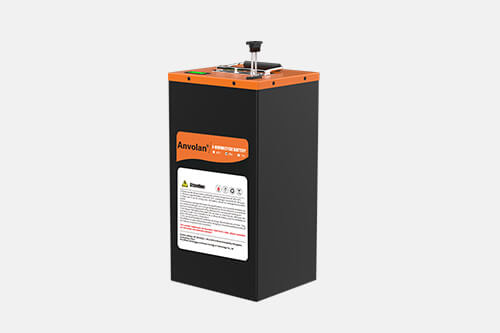
As special low-speed vehicles for stadium commuting, scenic spot sightseeing and park transportation, golf carts take operational stability and power consumption safety as core usage standards. The 51.2v 105ah Golf Cart Battery is the standard high-end power battery for premium golf carts. With 5376Wh large-capacity energy storage and stable low-voltage DC output, it matches the power drive and auxiliary electrical equipment of various four-wheel golf carts. Different from ordinary electric vehicle batteries, the performance release, service life and operational safety of this dedicated battery are fully supported by the matching circuit and line system. Reasonable circuit layout, standard wiring technology and perfect line protection can maximize the energy storage advantages of 51.2v 105ah Golf Cart Battery, eliminate potential safety hazards such as line overload, short circuit and electric leakage, and ensure stable driving speed and reliable operation of the electronic control system. From the dimensions of core circuit structure, wiring standards, line adaptation logic, common line fault troubleshooting and long-term maintenance, this paper comprehensively analyzes the circuit and line application system of this golf cart battery, providing professional and practical technical references for installation, commissioning, daily operation and maintenance, and fault overhaul.
Analysis on Core Circuit and Line Structure of 51.2v 105ah Golf Cart Battery
The 51.2v 105ah Golf Cart Battery is a dedicated lithium iron phosphate power battery, adapted to the 48V-level electronic control system of golf carts, with a full-charge voltage of up to 58.4V. Its low-speed operation characteristics meet the requirements of low-speed, stable and long-endurance operation of golf carts. The complete circuit and line system is composed of four modules: core energy storage loop, main control protection loop, load output loop and auxiliary power loop, which cooperate to form a complete closed-loop power consumption system. Firstly, the core energy storage loop takes the battery cell group as the core, realizes series balancing of single cells through internal precision wiring, and stably outputs rated voltage of 51.2V and rated capacity of 105Ah. The internal wiring adopts high-temperature resistant copper core cables with insulating packaging technology, fundamentally avoiding short circuit and virtual connection between cells and ensuring the stability of battery energy storage and discharge.
Secondly, the main control BMS protection loop is the core protection unit of the 51.2v 105ah Golf Cart Battery circuit system. The battery is equipped with a built-in intelligent BMS circuit board, supporting dedicated sampling lines, temperature control lines and protection lines, which can collect the voltage, current and temperature data of each cell in real time. The sampling lines accurately feed back the operating status of cells. Once abnormal conditions such as overcharge, overdischarge, overcurrent, high temperature and voltage imbalance occur, the protection lines will instantly cut off the power supply loop to realize active power-off protection, preventing cell damage and line burnout risks. Compared with the disadvantage of no protection lines for traditional lead-acid batteries, this lithium battery-specific circuit structure greatly improves the power consumption safety of golf carts and avoids line aging and equipment burnout caused by instantaneous high current impact.
Thirdly, the power load output loop is the core power transmission channel, connecting the main positive and negative terminals of the battery with the vehicle controller and drive motor. The 51.2v 105ah Golf Cart Battery is equipped with a high-current output line, which can adapt to the continuous discharge demand of the golf cart’s rated power drive motor. The line adopts high-spec heat-resistant and tensile copper wire with stable current carrying capacity, avoiding excessive line voltage drop and power stalling during heavy-load driving and frequent start-stop. Finally, the auxiliary power loop supplies power for auxiliary equipment such as lights, instrument panels, audio systems and reversing reminders. The independent shunt wiring prevents auxiliary power consumption from interfering with the main power loop, ensuring stable driving power and normal operation of all auxiliary equipment.
Standard Wiring Specifications for 51.2v 105ah Golf Cart Battery Circuits and Lines
Wiring technology directly determines the operational stability and service life of 51.2v 105ah Golf Cart Battery. Golf carts feature compact space and slight vibration during driving, which puts forward strict industry standards for line layout, wiring mode and wire selection. Non-standard wiring is highly likely to cause line virtual connection, heating, short circuit and electric leakage, and in severe cases, damage battery cells and the vehicle’s entire electronic control system. In terms of wire selection, the main power loop must adopt high-temperature resistant, aging-resistant, large-diameter pure copper cables with good conductivity and tensile resistance, which can bear the continuous discharge current of the battery and prevent overload heating and insulation layer melting of thin cables. The auxiliary loop can adopt standard matching thin wires to balance energy saving and safety, and all cables must be equipped with flame-retardant and insulating outer layers to adapt to outdoor sun exposure and humid court environments.
In terms of wiring technology, the positive and negative pole distinction principle must be strictly followed to prevent reverse connection and wrong connection. Before wiring, it is necessary to verify the battery P+ output positive interface and P- output negative interface. Matching ring terminals shall be used for terminal wiring to ensure full fitting between the terminal and the top surface of the battery pole. The fastening shall be carried out with standard torque, with the conventional fastening torque controlled at 8-10Nm, with uniform force to avoid virtual connection caused by loose fastening and pole damage caused by excessive fastening. Insulating protective caps shall be installed after wiring, and all exposed terminals shall be fully insulated and wrapped to prevent poor line contact and accidental short circuit caused by bump vibration. Meanwhile, the wiring shall follow the principles of neat main lines, independent branch lines and heat source avoidance. The main power lines are laid along the fixed vehicle body slots without tension, extrusion or dead-angle bending, and all lines are neatly bundled with ties to avoid friction and damage caused by messy wiring.
In terms of line layout protection, reasonable heat dissipation gaps shall be reserved. Lines around the battery shall not be close to the battery shell and motor heat sources to prevent accelerated aging of line insulation layers caused by long-term high-temperature baking. The court environment is mostly humid and dusty, so all line joints and terminals shall be coated with insulating and anti-corrosion grease to prevent increased contact resistance and line heating caused by oxidation and corrosion. It is forbidden to arbitrarily change the line direction, connect shunt lines in parallel or lengthen main cables without permission. Private modification will lead to unbalanced line voltage drop and uneven current distribution, causing abnormal battery discharge, reduced cruising range and line overload burnout. Standardized wiring is the foundation to ensure the long-term and stable operation of 51.2v 105ah Golf Cart Battery.
Adaptation Logic and Advantages of 51.2v 105ah Golf Cart Battery Circuits and Lines
Compared with the messy circuit structure of traditional series lead-acid battery packs, the integrated design of 51.2v 105ah Golf Cart Battery optimizes the overall vehicle circuit system, simplifies the wiring structure, reduces line nodes, and fundamentally lowers the probability of line faults. Traditional golf cart lead-acid battery packs require multiple batteries in series with numerous line nodes and complex wiring, which are prone to node oxidation, virtual connection and electric leakage after long-term use. In contrast, this integrated battery requires no series modification, with neat and stable overall lines and greatly reduced current transmission loss. Its dedicated circuit system has accurate current adaptation capability. The 105Ah large capacity matches the line bearing capacity, realizing stable continuous discharge without instantaneous current peaks, which perfectly adapts the low-speed uniform driving and frequent start-stop characteristics of golf carts.
Meanwhile, the circuit and line system has excellent voltage stabilization and anti-interference capability. The built-in equalization line can automatically adjust cell voltage balance, avoid overall loop fluctuation caused by abnormal single-cell voltage, ensure constant output voltage, and realize uniform and stable driving without stalling or fluctuating power. The line has a built-in overload current limiting mechanism. When instantaneous abnormal current occurs in the vehicle circuit, the line protection module can quickly limit current and stabilize voltage, realizing double protection with the BMS system, which not only protects battery cells from damage, but also safeguards core electrical equipment such as vehicle controllers and motors. In addition, the independent charge-discharge separated line design ensures no mutual interference between the charging loop and discharge loop. The charging loop stores energy stably during charging, and the discharge loop outputs energy efficiently during operation, greatly improving energy utilization rate, giving full play to the 105Ah large-capacity endurance advantage and effectively increasing the single-day cruising range of golf carts.
Common Faults and Accurate Troubleshooting Methods for 51.2v 105ah Golf Cart Battery Circuits and Lines
In daily use, most operational faults of 51.2v 105ah Golf Cart Battery are not caused by cell damage but abnormal circuit and line conditions. Common faults include line virtual connection and heating, excessive line voltage drop, loop short circuit and electric leakage, auxiliary line failure, and abnormal charge-discharge lines. Accurate line troubleshooting can quickly resolve faults and reduce maintenance costs. First, line heating and insufficient power are mostly caused by loose terminals, line oxidation and substandard wire specifications. The troubleshooting focuses on checking battery positive and negative terminals and main cable joints, cleaning oxidized and corroded parts, re-fastening terminals and replacing aging wires to ensure tight line contact and stable resistance.
Second, sudden cruising range drop and large voltage fluctuation are mainly caused by bent and damaged lines, broken internal copper wires and poor loop contact, leading to unstable current transmission. It is necessary to inspect the main power lines section by section, check for line extrusion, damage and hidden breakage, replace damaged lines, rearrange wiring, and eliminate abnormal line voltage drop. Third, circuit short circuit and electric leakage are mostly caused by damaged insulation layers, exposed lines and humid water ingress. It is required to comprehensively check the integrity of line insulation layers, wrap damaged parts, dry accumulated water at line joints, strengthen insulation protection, and eliminate hidden dangers of electric leakage and short circuit. Regular re-inspection of line waterproof and insulation performance is needed in humid court environments.
Fourth, abnormal charging and failure to full charge are concentrated in the charging loop. Aging charging wires and loose charging terminals will cause unstable charging current and intermittent energy storage. It is necessary to check dedicated charging lines and terminals, replace aging charging cables, fasten charging interfaces, and ensure unobstructed charging loops. Fifth, failure of auxiliary electrical equipment and abnormal main control signals are mostly caused by falling off of auxiliary lines and faulty sampling lines. It is required to check shunt lines and BMS sampling lines, reset falling lines, repair faulty sampling nodes, and restore normal operation of the vehicle’s electrical system. All line troubleshooting must be carried out with power cut off to avoid safety accidents such as electric shock, line sparking and battery breakdown caused by live maintenance.
Long-term Maintenance Skills for 51.2v 105ah Golf Cart Battery Circuits and Lines
Aiming at the working conditions of golf carts including high-frequency outdoor use, bumpy driving, humidity and dust, regular line maintenance can greatly reduce fault probability and extend the service life of batteries and the overall vehicle circuit system. It is necessary to conduct regular line inspections in daily use, check main cables, terminals and joints every week for looseness, oxidation, insulation layer damage and line displacement, timely clean dust and corrosion on terminals, and supplement anti-corrosion and insulating grease. Avoid violent bumping and forced extrusion of the vehicle during driving to prevent pulling, bending and damage of internal lines. Cut off the power in time after parking to avoid long-term live placement of lines and slow down line aging.
When the vehicle is idle for a long time, check the overall line status to ensure all lines are neat and undamaged with firmly fastened terminals. Store the battery with standard power level and charge it lightly every month to prevent cell and line aging caused by static power loss. It is forbidden to privately install additional electrical equipment or modify lines to avoid overload exceeding line bearing capacity and causing overheating and burnout. After use in humid environments such as rainy and foggy days, timely check for water accumulation and moisture at line joints, take drying protection measures to prevent line oxidation and electric leakage. Check line heat dissipation status in high-temperature summer environments to avoid long-term heat source baking and delay insulation layer aging. Standardized and regular line maintenance can continuously ensure the stable operation of the 51.2v 105ah Golf Cart Battery circuit system, give full play to battery performance, and reduce later operation and maintenance costs.
Conclusion
The overall performance and operational safety of 51.2v 105ah Golf Cart Battery are highly dependent on a professional and standardized circuit and line system. The integrated lithium battery-specific circuit structure, zoned independent line layout and standardized wiring technology are its core advantages over traditional batteries, which effectively solve the pain points of messy lines, frequent faults and low safety of traditional golf carts. From the core energy storage loop and main control protection loop to the power output and auxiliary power loops, the complete line system realizes efficient battery power transmission and full-process safety protection, adapting to the full-scenario operation needs of golf carts. In the process of use, operation and maintenance, users must strictly follow wiring specifications, conduct daily line inspection, fault troubleshooting and long-term maintenance, and avoid non-standard wiring and private modification. This can not only fully release the large-capacity and high-stability performance advantages of 51.2v 105ah Golf Cart Battery, but also comprehensively ensure the safe, stable and long-term operation of the vehicle’s overall circuit system, greatly reducing equipment failure rate and operation and maintenance costs.
Be the first to receive our latest news, how-to user guides,
and exclusive deals! Subscribe now.

 Headquarter Address:10F, Building 25, N0. 179 Fengguan, Dongshen Road, Dongguan, Guangdong
 Factory Address:Building 3, Area D, Shengyang Science and Technology Industrial Park, East District of Suichuan County Industrial Park, Ji'an, Jiangxi
 Headquarter Telephone No.:+86 769 2366 8529
Factory Telephone No.:+86 796 6111618
 Contact Person:Kevin Chen
 Email Address:chen@xpower-world.com