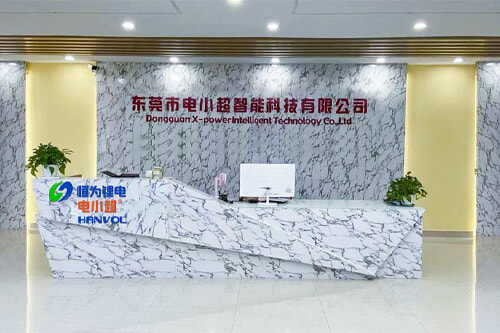
Global layout
 +86 769 2366 8529




Time:2026-08-08 Views:106
As the core power component of golf carts used in golf courses, scenic spots, campus parks and other scenarios, batteries directly determine the operating efficiency, service life and overall user experience of the vehicles. Traditional 48V lead-acid batteries have long dominated the market due to their low upfront cost, yet they expose numerous inherent defects in long-term use, including short service life, slow charging, heavy weight and tedious maintenance, which continuously increase the overall operation and maintenance costs for users. The 48V LiFePO4 golf cart replacement battery emerges as the optimal upgrade solution for traditional lead-acid batteries, delivering high-efficiency, stable and low-cost power support for commercial and residential golf carts with all-round superior performance.
Traditional 48V lead-acid golf cart batteries have become a prominent industry pain point restricting user experience. First of all, they feature an extremely short service life. The conventional charge-discharge cycle life of lead-acid batteries is only 300 to 500 times, with obvious capacity attenuation and insufficient power after 2 to 3 years of regular use, requiring frequent replacements and resulting in high long-term cumulative costs. Secondly, they suffer from low charging efficiency. A full charge takes 8 to 10 hours, which cannot meet the demand for uninterrupted high-intensity operation of golf courses and scenic spots, leading to forced shutdowns and reduced operational efficiency once the power is exhausted. In addition, lead-acid batteries are extremely heavy, greatly increasing the overall weight of golf carts, aggravating wear on the chassis, tires and braking system, reducing driving flexibility and actual cruising range. Moreover, regular maintenance such as water refilling and voltage inspection is mandatory. Long-term idle storage easily causes sulfation, power loss, bulging and liquid leakage. The cumbersome maintenance process and potential acid leakage risks not only waste labor costs but also cause environmental pollution and hidden safety hazards.
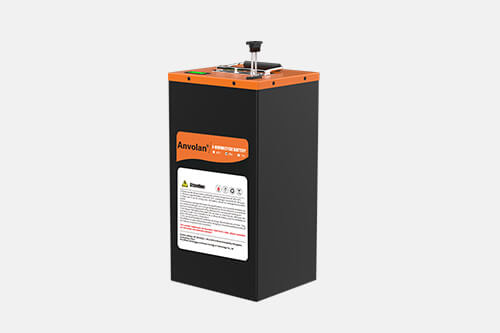
The 48V LiFePO4 dedicated replacement battery fully solves all the drawbacks of lead-acid batteries with comprehensive performance upgrades. It is perfectly compatible with most mainstream 48V golf cart models including Club Car, EZGO and Yamaha. No modification to vehicle circuits or equipment is required, supporting direct in-situ replacement and plug-and-play use. In terms of core service life, the LiFePO4 battery achieves 3000 to 5000 charge-discharge cycles, enabling stable operation for 8 to 10 years under standard use conditions. Its service life is 3 to 5 times that of lead-acid batteries, completely eliminating frequent battery replacement troubles and significantly reducing equipment iteration costs.
In terms of power and cruising performance, the 48V LiFePO4 battery boasts an energy density three times that of lead-acid batteries, with a power conversion efficiency of over 92%, far exceeding the 80% efficiency of lead-acid batteries and minimizing energy loss during charging and discharging. It delivers stable discharge voltage and continuous power output without the problems of sudden voltage drop, weak power and poor climbing performance in the later service stage of lead-acid batteries. Under the same working conditions, its single-charge cruising range is 20% to 30% longer than that of lead-acid batteries, fully adapting to long-distance driving on golf courses and multi-terrain commuting in scenic spots. Meanwhile, it supports fast charging within 2 to 3 hours, greatly shortening charging waiting time, realizing all-day operation and overnight fast power replenishment, maximizing vehicle utilization and meeting the high-intensity use demands of commercial scenarios.
Lightweight design and maintenance-free performance are the core competitive advantages of this battery. The weight of the 48V LiFePO4 battery is only about 40% of the equivalent lead-acid battery, effectively reducing the overall load of the golf cart. It lowers the burden on the vehicle suspension and braking system, reduces vehicle wear and tear, extends the overall service life of the cart, and improves driving flexibility and braking sensitivity for a better riding experience. Adopting an integrated sealed structure, the battery contains no liquid electrolyte, completely avoiding risks of acid leakage, bulging and explosion with higher safety factors. It is totally maintenance-free with no need for regular water refilling or routine inspection. The ultra-low self-discharge rate prevents rapid power loss and sulfation during long-term idle storage, saving a large amount of labor maintenance time and costs.
In terms of safety protection and compatibility, the battery is equipped with an intelligent BMS (Battery Management System) that real-timely monitors battery voltage, current and temperature. It provides comprehensive protection against overcharging, overdischarging, overcurrent, short circuit, high temperature and low temperature, effectively avoiding potential electrical safety risks. It adapts to complex outdoor working conditions with stable power output in both high-temperature summer and low-temperature winter environments. The high-strength and wear-resistant outer shell features shockproof, drop-proof, waterproof and dustproof performance, ensuring strong durability for long-term outdoor open-air use.
From the perspective of full-life cycle cost accounting, although the upfront purchase cost of the 48V LiFePO4 golf cart battery is slightly higher than that of lead-acid batteries, its ultra-long service life, zero maintenance cost and low loss characteristics make its overall life-cycle cost much lower. Traditional lead-acid batteries need 4 to 5 replacements within 8 to 10 years, with extremely high comprehensive costs including maintenance, wear and shutdown losses. In contrast, a single LiFePO4 battery can operate stably for ten years without frequent replacement and maintenance, presenting outstanding cost performance.
Be the first to receive our latest news, how-to user guides,
and exclusive deals! Subscribe now.

 Headquarter Address:10F, Building 25, N0. 179 Fengguan, Dongshen Road, Dongguan, Guangdong
 Factory Address:Building 3, Area D, Shengyang Science and Technology Industrial Park, East District of Suichuan County Industrial Park, Ji'an, Jiangxi
 Headquarter Telephone No.:+86 769 2366 8529
Factory Telephone No.:+86 796 6111618
 Contact Person:Kevin Chen
 Email Address:chen@xpower-world.com