Global layout
 +86 769 2366 8529




Time:2026-09-24 Views:192
As special transportation equipment for course commuting, park sightseeing and on-site operations, golf carts are widely used in high-end golf courses, resort parks and villa communities due to their advantages of stable operation, low noise, environmental protection and stable cruising range. The stable power output, continuous endurance and smooth starting performance of vehicles entirely depend on the working state of the built-in energy storage cells, and cell activity is the core indicator that measures battery health and determines the long-term service performance of equipment. Cell activity refers to the activity degree and effective efficiency of lithium ion deintercalation, migration and electrochemical reaction inside lithium batteries, which directly affects the charging and discharging rate, capacity utilization, power stability and cycle life of batteries. Many golf carts suffer from problems such as reduced cruising range, weak starting power, intermittent power and false full charge after one or two years of use. These issues are not caused by battery hardware failures, but irreversible attenuation of cell activity resulting from improper working condition adaptation and non-standard maintenance. Mastering cell activity maintenance and activation skills can maximize the rated performance of equipment and greatly extend the service life of batteries.
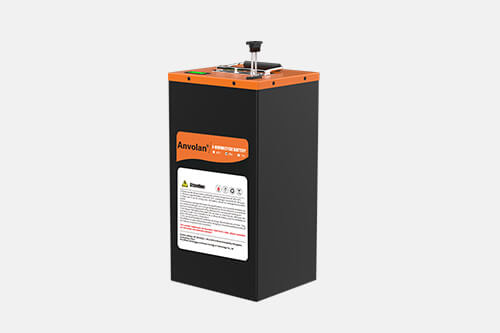
Most mainstream golf carts are equipped with 48V 50Ah lithium iron phosphate energy storage modules, which adapt to the exclusive working conditions of low speed, frequent start-stop and stable load on site, featuring strong stability, high safety and long cycle life. In terms of working principles, the entire energy conversion process of cells relies on the bidirectional reversible movement of lithium ions. During charging, lithium ions are deintercalated from positive electrode materials, migrate evenly through electrolyte and embed into the negative electrode. During discharging, lithium ions move in the reverse direction to release electric energy and provide power for vehicle driving. When the cell activity is sufficient, ion migration is smooth and the reaction is fully uniform, enabling the battery to fully release its rated capacity with stable power output under low-speed driving and stable load conditions. During long-term use, minor internal side reactions will occur, a passivation protective layer gradually forms on the negative electrode, electrolyte is slightly consumed, ion transmission channels are blocked, and the number of active lithium ions participating in effective reactions continues to decrease, eventually leading to reduced cell activity and overall battery performance degradation, failing to meet the needs of daily on-site commuting and high-frequency use.
Irregular charge and discharge operations under exclusive working conditions are the primary core factor inducing rapid attenuation of golf cart cell activity. Golf carts mostly work in the mode of centralized high-frequency use and intermittent idling, and many users have the wrong habit of charging only after power exhaustion and storing the battery in a deep power deficit state. After the equipment power is completely exhausted, the cells stay in a passive depleted state for a long time, damaging the lattice structure of negative electrode materials. A large number of lithium ions lose activity and are permanently locked, unable to participate in subsequent electrochemical reactions, resulting in irreversible active loss. At the same time, when climbing slopes or carrying full loads on site, the instantaneous load of the equipment increases, and short-term high-current discharge will cause a slight rise in internal cell temperature, accelerate the occurrence of internal side reactions and intensify the thickening of the passivation layer. Different from ordinary transportation equipment, the frequent start-stop and uniform heavy-load working conditions of golf carts will continuously accumulate cell loss. Without regular balanced maintenance, the activity difference of single cells will continue to expand, and the overall performance of the battery pack will be dragged down by weak cells, resulting in dual attenuation of cruising range and power.
Ambient temperature change is an invisible key inducement affecting cell activity, which is easily ignored. Lithium battery cells are extremely sensitive to temperature. Golf courses are mostly open outdoor spaces, and equipment is exposed to natural environments for a long time, making temperature fluctuation have a significant impact on cell activity. Under high-temperature exposure in summer, the temperature of the vehicle body and battery compartment rises sharply, which accelerates the decomposition and aging of electrolyte, speeds up the formation of the negative electrode passivation film, greatly inhibits cell activity, and causes continuous loss of active substances after long-term high-temperature use. In low-temperature winter environments, electrolyte viscosity increases, the migration resistance of lithium ions rises significantly, and the natural activity of cells decreases. Forcing full-load driving and direct charging at low temperatures will easily cause lithium precipitation on the negative electrode, resulting in permanent cell damage and a sharp drop in cell activity. The use and charging behavior under extreme temperature differences are the main causes of premature aging and activity failure of most golf cart batteries.
Improper idle storage methods and lack of maintenance are important causes of cell activity dormancy and continuous attenuation. Golf carts have obvious seasonal differences in usage with long idle cycles, and most users park the vehicles directly with full power or no power during idling, which easily induces abnormal attenuation of cell activity. Long-term static storage with full power keeps cells in a high-pressure saturated state, where internal side reactions continue to proceed and constantly consume active lithium ions and electrolyte. Storage with insufficient power puts cells in a deep dormant state with continuous passivation of ion activity; long-term lack of power supplement and activation will lead to permanent deactivation of some cells. Meanwhile, humid and dusty storage environments will cause slight oxidation of battery terminals and unstable circuit contact, triggering local micro-discharge and continuous loss of cell activity. Over time, faults such as virtual battery power, abnormal charging and unstable power will occur, seriously shortening the service life of equipment.
Standardized full-cycle maintenance can effectively maintain cell activity, repair slight dormant states, delay performance attenuation, and adapt to the exclusive working conditions of golf carts. In daily use, deep discharge should be avoided, and power should be replenished in a timely manner when the remaining power is about 20%. Adhere to the principle of shallow charging and shallow discharging to reduce cell chemical stress loss. Be sure to avoid charging immediately after full-load slope climbing or high-temperature exposure; resume charging only after the cell temperature drops to normal temperature to stabilize ion activity. Charging must use the original special charger of the equipment, match the exclusive charging parameters of 48V lithium batteries, avoid unbalanced charging caused by mismatched voltage and current, and prevent activity differentiation of single cells. In low-temperature winter environments, move the equipment to a normal temperature area for warming up before charging to reduce lithium precipitation risks and protect the basic activity of cells.
For golf cart batteries left idle for a long time, standardized activity activation and maintenance procedures should be implemented. Maintain the power level at the optimal range of 40% to 60% during idling. In this state, the internal cell pressure is the minimum and the chemical state is the most stable, which can effectively avoid active loss. Complete a full low-current charge and discharge cycle every two to three months, slowly release power and then perform standardized full charging to awaken dormant cell activity and balance the activity difference and voltage difference of single cells in the entire pack. Meanwhile, rely on the intelligent balancing function of the battery management system to correct cell parameter deviations in real time and ensure synchronous activity of the entire cell pack. Regularly clean dust and oxide layers on battery interfaces to ensure stable circuit conduction and eliminate local micro-discharge loss. Regular precise maintenance can keep cells in a high-activity state for a long time, stabilize the power output and cruising performance of golf carts, greatly reduce battery replacement costs, and provide reliable guarantee for long-term stable on-site operation.
Be the first to receive our latest news, how-to user guides,
and exclusive deals! Subscribe now.

 Headquarter Address:10F, Building 25, N0. 179 Fengguan, Dongshen Road, Dongguan, Guangdong
 Factory Address:Building 3, Area D, Shengyang Science and Technology Industrial Park, East District of Suichuan County Industrial Park, Ji'an, Jiangxi
 Headquarter Telephone No.:+86 769 2366 8529
Factory Telephone No.:+86 796 6111618
 Contact Person:Kevin Chen
 Email Address:chen@xpower-world.com