Global layout
 +86 769 2366 8529




Time:2026-05-16 Views:98
40Ah 60V Battery: Analysis of High-Voltage Lithium Battery Internal Resistance Control, Energy Loss and Low-Consumption Operation
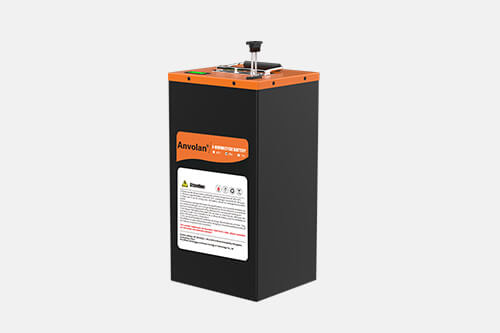
The 40Ah 60V Battery is a mid-range high-voltage large-capacity energy storage lithium battery, widely used in electric transportation equipment, off-grid outdoor energy storage, light industrial machinery and commercial standby power supplies. In the commercial application of lithium batteries, energy loss is a key indicator for judging battery quality and calculating usage costs. Battery loss includes transmission loss, static self-discharge loss, working condition loss and aging loss, which directly determine energy utilization efficiency, battery service life and terminal operating costs. Ordinary high-voltage batteries on the market generally suffer from high internal resistance, rapid power loss and large heat loss during operation, resulting in serious energy waste in long-term use. From a pure energy loss perspective, this paper deeply analyzes the loss control technology of the 40Ah 60V battery. It elaborates on core advantages such as internal resistance optimization, charge and discharge energy consumption suppression, environmental loss protection, aging attenuation control and transportation loss reduction. By comparing the loss pain points of traditional batteries, it clarifies the economic value of low-loss design, providing professional selection references for cross-border buyers and equipment supporting manufacturers.
Optimized cell internal resistance structure cuts conductive loss fundamentally. Internal resistance is the core factor causing battery energy loss. Excessively high internal resistance generates massive heat during current transmission, leading to invalid power consumption. This 40Ah 60V battery adopts high-purity lithium battery raw materials and refined coating technology to reduce internal conductive resistance of cells, with single cell internal resistance strictly controlled at a low standard. Adopting a neat 16-series series structure, the cells are precisely sorted with internal resistance deviation within ±2%, avoiding extra energy consumption caused by uneven voltage difference of series battery packs. Thickened tin-plated copper bars are used as conductive media, reducing conductive loss by more than 35% compared with ordinary iron connecting pieces. It minimizes heat accumulation during current transmission, prevents electric energy loss through waste heat, and greatly improves effective energy utilization rate.
Controlled charge and discharge loss optimizes energy conversion efficiency. Ordinary high-voltage batteries are prone to current fluctuation and charge retention during charging and discharging, resulting in energy waste. Equipped with a customized intelligent BMS loss control system, the battery adopts a segmented current-limiting charging algorithm. It supplements energy with fast charging in the early stage and constant-voltage trickle charging in the later stage to reduce polarization loss and avoid power loss caused by overheating, achieving a charging conversion efficiency of 94%. During discharge, the linear voltage stabilization output technology ensures stable current output and eliminates invalid power consumption caused by instantaneous pulse current, adapting to multiple discharge modes such as stable driving, continuous power supply and intermittent start-stop. For heavy-load working conditions such as acceleration, the system automatically adjusts current output logic to restrain reactive power consumption and reduce additional energy loss caused by load mutation.
Reduced static self-discharge loss minimizes idle power waste. Static self-discharge loss during storage and equipment idling is an unavoidable energy consumption problem for commercial batteries. Inferior batteries have a monthly self-discharge rate of over 6%, which is likely to cause power deficit, vulcanization and capacity attenuation during long-term storage. Adopting passivated cell chemical formula, the 40Ah 60V battery optimizes electrolyte stability to block invalid internal charge consumption, keeping the monthly self-discharge rate below 2.5%. In power-off sleep mode, the BMS system automatically closes redundant power-consuming modules and retains only basic monitoring functions to reduce static power consumption. It can store power for a long time without frequent supplementary charging, cutting manual maintenance energy consumption and power loss during marine transportation and inventory storage.
Suppressed environmental working condition loss adapts to complex temperature differences. External factors such as temperature and humidity are important incentives for increased battery loss. High temperature accelerates cell aging and power consumption, while low temperature reduces electrolyte activity and aggravates discharge loss. Made of weather-resistant cell materials, the battery operates stably from -15℃ to 55℃ with a stable energy consumption coefficient. The double-layer structure with heat insulation and heat dissipation functions quickly discharges residual heat at high temperature to prevent irreversible loss caused by high-temperature polarization. At low temperatures, the low internal resistance characteristic reduces discharge heat loss and guarantees low-temperature discharge efficiency. Meanwhile, the sealed and waterproof structure isolates erosion from moisture and dust, prevents oxidation and electric leakage of metal terminals, and eliminates hidden power loss caused by external corrosion.
Delayed aging loss extends battery service life. Repeated charging and discharging easily cause cell polarization and active substance attenuation, resulting in irreversible aging loss. Optimizing the electrochemical system, the battery adds anti-aging electrolyte additives to slow down cell polarization and restrain continuous capacity attenuation. The built-in active equalization function regularly corrects inter-string voltage difference to avoid abnormal energy consumption of the entire battery pack caused by excessive loss of single cells. After cycle tests, the battery retains more than 83% of the initial capacity after 1,300 charge-discharge cycles, with a gentle loss rate and no abrupt attenuation. Compared with lead-acid batteries featuring high aging loss and short service life, it effectively reduces replacement frequency and cuts comprehensive loss costs in the long run.
Strictly controlled physical loss ensures smooth cross-border circulation. Adapted to the harsh storage and transportation environment with vibration, stacking and temperature alternation, the battery reinforces internal spot welding structure and is equipped with insulating buffer gaskets to reduce virtual connection loss caused by transportation bumps. Every battery passes airtight insulation inspection before delivery to eliminate hidden faults such as liquid leakage and electric leakage, lowering power loss during logistics. The standardized compact shell improves stacking stability, reduces storage space waste and cuts logistics energy consumption. For cross-border buyers, the low-loss 40Ah 60V battery features high energy utilization rate, low maintenance cost and slow aging attenuation. Compatible with electric vehicles, energy storage power stations and agricultural machinery, it is a cost-effective premium product with excellent energy consumption control in the mid-range high-voltage energy storage market.
Be the first to receive our latest news, how-to user guides,
and exclusive deals! Subscribe now.

 Headquarter Address:10F, Building 25, N0. 179 Fengguan, Dongshen Road, Dongguan, Guangdong
 Factory Address:Building 3, Area D, Shengyang Science and Technology Industrial Park, East District of Suichuan County Industrial Park, Ji'an, Jiangxi
 Headquarter Telephone No.:+86 769 2366 8529
Factory Telephone No.:+86 796 6111618
 Contact Person:Kevin Chen
 Email Address:chen@xpower-world.com