Global layout
 +86 769 2366 8529




Time:2026-06-08 Views:80
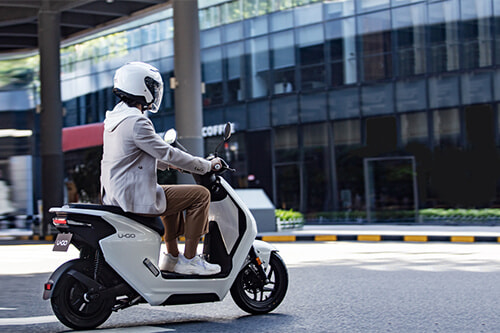
The 2500W battery electric motorcycle adopts full-stack modular design as its core R&D concept, completely subverting the design drawbacks of traditional electric motorcycles with integrated fixed structures. Targeting core pain points such as overall assembly, later maintenance, scenario adaptation and component iteration, it adopts an industrial-grade architecture design with zoned modularization, independent integration and standardized interfaces. The vehicle independently splits and integrates the power module, battery module, electronic control module, body structure module, walking braking module and exterior cladding module. Relying on the adaptive advantages of the 2500W golden-power powertrain, it realizes independent operation and precise coordination of each module without mutual interference. It not only ensures the stable output of overall riding performance, but also greatly improves the vehicle’s assembly accuracy, maintenance convenience and scenario adaptability. Compared with traditional integrated electric motorcycles, the modular architecture enables this model to achieve all-round upgrades in stability, durability, maintenance efficiency and expandability, adapting to diverse scenarios such as urban commuting, daily transportation, short-distance travel and light sports riding, making it a benchmark product for modular design among small and medium-power electric motorcycles.
The core of the vehicle adopts an independent power modular design, integrating the 2500W high-power motor, transmission components and heat dissipation structure into an integrated independent power module for fully encapsulated integration. As a standardized independent unit, the power module is installed on the frame through fixed-point alignment, featuring precise positioning and firm fixation, effectively avoiding loosening, abnormal noise and offset caused by external assembly of traditional motors. The independent modular encapsulation enables the power system to operate independently without interference from body deformation and vibration, delivering more stable and linear power output. Meanwhile, the power module is equipped with an independent heat dissipation air duct and heat insulation structure to conduct heat separately, greatly reducing thermal attenuation under high-load operation and continuously ensuring the stable release of 2500W power. In terms of later maintenance, the power module supports overall disassembly and independent inspection without dismantling the overall vehicle structure, making motor maintenance and transmission accessory replacement more convenient, greatly reducing maintenance costs and time, and solving the problems of cumbersome inspection and easy body damage during maintenance of traditional electric motorcycle power systems.
The dual modular design of battery and electronic control builds the vehicle’s core intelligent system, realizing independent and accurate energy supply and power regulation. The battery module adopts an integrated modular design with highly integrated cells, protective shell, buffer structure and temperature measurement sensors, forming a standardized independent power supply module. It has an independent protection system of waterproofing, dustproofing, shockproofing and explosion-proofing, free from the impact of other vehicle components and ensuring more stable cruising output. The modular battery supports independent disassembly and separate detection, enabling accurate troubleshooting of single-cell faults without overall disassembly, and greatly improving maintenance accuracy. The matching intelligent electronic control module is an independently encapsulated unit with standardized docking interfaces for batteries and motors, featuring stable signal transmission and strong anti-interference ability. The electronic control module can independently complete data collection, power regulation, safety protection and mode switching, with independent operation of each program partition to avoid functional conflicts. It also supports later program iterative upgrades without hardware replacement, enabling continuous optimization of vehicle performance.
The body structure adopts a zoned modular architecture, splitting the main frame, rear swingarm, shock absorption suspension and chassis protection structure into multiple standardized structural modules. Each module is fixed with high-precision interface bolts, featuring high splicing accuracy and excellent overall integrity. Once the local part of a traditional integrated body structure is damaged, it is prone to overall deformation and associated faults. In contrast, the modular body of this model supports independent replacement of local modules. Chassis collisions, local frame damage and suspension wear can be repaired and replaced targeted without replacing the entire body structure, greatly improving vehicle durability and economy. Meanwhile, the body exterior cladding adopts a split modular design with independently formed and installed exterior panels, featuring uniform gaps and high assembly accuracy superior to integral injection-molded models. Scratches and damage in daily use only require replacement of the corresponding single module instead of the whole exterior assembly, effectively reducing maintenance costs and improving repair efficiency.
The modular design of the walking and braking system further improves the vehicle’s handling stability and maintenance convenience. Wheel hubs, tires, brake calipers, brake discs and brake pump bodies are all independent standardized modules with strong versatility and high adaptability. The independent integrated braking module delivers accurate braking response and stable working conditions without interference from other components, maintaining stable performance without thermal attenuation or failure during continuous braking. Each walking and braking module supports independent detection and targeted single-point replacement of worn, aging and faulty parts, avoiding resource waste caused by overall accessory replacement of traditional models. In addition, the modular structure reserves sufficient optimization space, allowing users to upgrade braking, suspension and walking modules according to riding needs to realize personalized performance iteration, balancing original factory stability and later expandability.
The all-round modular design enables the 2500W battery electric motorcycle to form core advantages of standardization, integration, high adaptability and easy maintenance. The full-dimensional modular splitting and integration of core power, intelligent electronic control, energy storage system, body structure, exterior cladding and walking braking not only guarantees the collaborative stability of all vehicle systems and maximizes the release of 2500W power performance, but also thoroughly solves the industry shortcomings of traditional electric motorcycles such as cumbersome maintenance, high maintenance costs, fixed structure and no iteration space. With the precise modular architecture design, the vehicle integrates high performance, high stability, high practicality and high expandability, perfectly meeting public daily riding needs and standing out as a cost-effective and practical high-quality model in the small and medium-power electric motorcycle market.
Be the first to receive our latest news, how-to user guides,
and exclusive deals! Subscribe now.

 Headquarter Address:10F, Building 25, N0. 179 Fengguan, Dongshen Road, Dongguan, Guangdong
 Factory Address:Building 3, Area D, Shengyang Science and Technology Industrial Park, East District of Suichuan County Industrial Park, Ji'an, Jiangxi
 Headquarter Telephone No.:+86 769 2366 8529
Factory Telephone No.:+86 796 6111618
 Contact Person:Kevin Chen
 Email Address:chen@xpower-world.com