Global layout
 +86 769 2366 8529




Time:2026-07-14 Views:38
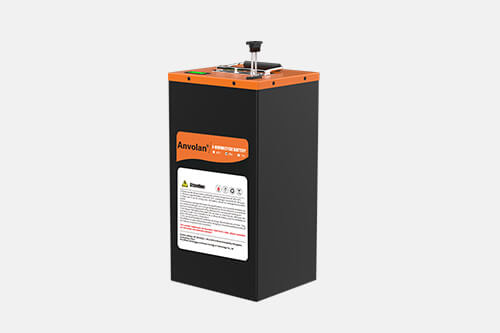
The 12v 200ah lithium battery is a mainstream large-capacity lithium battery product in the fields of off-grid energy storage, mobile power supply and standby power supply. With the core advantages of long cycle life, low self-discharge rate and high safety factor, it is widely used in household photovoltaic energy storage, RV and yacht power supply, outdoor engineering equipment, communication base stations, security systems, UPS standby power supply and other scenarios. The long-term operation stability, battery life performance, service life and safety factor of the battery are completely determined by the compliance and adaptability of the installation environment in the early stage. Different from traditional lead-acid batteries with extensive environmental adaptability, the 12v 200ah lithium battery is a high-precision electrochemical energy storage device with strict standardized requirements for installation temperature, ventilation conditions, dry and wet environment, spatial layout, vibration working conditions, dust and water resistance levels. From the perspective of installation environment, building a matched installation working condition and avoiding hidden dangers in harsh environments are the core prerequisites for fully releasing battery performance, eliminating potential safety faults and extending equipment service life, as well as a key link for the compliant implementation of various civil and industrial energy storage projects.
Temperature environment is the core factor affecting the energy storage efficiency and operation safety of the 12v 200ah lithium battery, and also the primary environmental indicator to be controlled in the installation process. This lithium battery has clear threshold values for operating temperature. The standard charging temperature ranges from 0℃ to 50℃, and the standard discharging operating temperature ranges from -20℃ to 60℃. Installation and use in environments exceeding the temperature limit will directly cause battery performance attenuation and potential safety hazards. In a high-temperature installation environment, long-term exposure to direct sunlight, closed high-temperature computer rooms and areas close to heat sources will abnormally increase the electrolyte activity inside the battery, causing frequent overload protection triggered by the BMS protection system. This will not only greatly reduce the charge and discharge efficiency, but also accelerate battery cell aging, cause irreversible capacity attenuation, and even lead to thermal runaway risks in severe cases. Installation and use in low-temperature environments will easily cause lithium precipitation inside the cells and sharp increase of internal resistance when charging below 0℃, damaging the internal structure and greatly shortening the battery cycle life. Therefore, the actual installation should avoid direct sunlight, heating equipment, generator sets and other heat sources. Thermal insulation cabinets shall be equipped in alpine scenarios, and heat dissipation space shall be reserved in high-temperature scenarios to ensure the battery operates within the compliant temperature range for a long time.
Ventilation and spatial layout environment are the basic installation conditions for the safe and stable operation of the 12v 200ah lithium battery. The large-capacity lithium battery will generate a small amount of heat during operation. Heat accumulation in a closed and unventilated installation environment will increase the battery cell temperature, causing protection shutdown and performance degradation. Industry installation specifications clearly require that the battery be installed in an open area with smooth ventilation and circulating air, and installation in completely closed boxes, narrow interlayers and closed cabinets is prohibited. Meanwhile, standardized heat dissipation gaps shall be reserved, with a ventilation distance of no less than 15 millimeters around the battery. Close stacking and installation of multiple batteries are forbidden to ensure air convection and heat dissipation. For cabinet integrated installation scenarios, natural ventilation openings or micro heat dissipation equipment should be equipped to avoid heat accumulation. In addition, the installation space should be flat and open, avoiding low and narrow areas with sundry accumulation, so as to ensure the operating space for later maintenance, wiring and equipment debugging, and realize dual adaptation of heat dissipation and operation and maintenance.
Humidity, dust and waterproof environments directly determine the long-term service life and insulation safety of the 12v 200ah lithium battery. The battery shell is mostly made of high-strength ABS material with a basic protection level of IP56 to IP65, which can resist slight dust and water splashes, but cannot adapt to harsh environments such as water immersion, high humidity condensation, dust accumulation and salt spray corrosion. When installed in a humid environment, water vapor in the air will condense on the battery terminals and circuit board surfaces, causing terminal oxidation, circuit leakage and short-circuit faults. Long-term exposure to dusty environments will block heat dissipation gaps due to dust accumulation, reduce heat dissipation efficiency and easily lead to decreased insulation performance. Coastal salt spray, chemical corrosion and heavy oil pollution scenarios will accelerate the corrosion of the battery shell and the oxidation of metal terminals, damaging circuit stability. Therefore, the installation environment should be kept dry and clean with the relative humidity controlled within 40% to 80% without condensation, far away from water accumulation, oil pollution and corrosive gas scenarios. Outdoor installation must be equipped with protective cabinets to avoid direct rain washing and sand accumulation, eliminating faults such as corrosion, short circuit and electric leakage from the environmental level.
Vibration and mechanical installation environment are key adaptation specifications for mobile equipment energy storage scenarios, suitable for special working conditions such as RVs, ships and vehicle-mounted engineering equipment. The interior of the 12v 200ah lithium battery consists of cells, welding circuits and BMS circuit boards. Long-term exposure to high-frequency vibration, bumping and displacement will easily cause latent faults such as loose internal welding points, falling off circuits and displaced cells, resulting in battery open circuit and protection failure. Therefore, during installation in mobile scenarios, a flat and solid installation base surface shall be selected, fixed and locked firmly through the battery’s reserved fixing holes, and anti-slip and shock-absorbing gaskets shall be installed to prevent displacement, collision and shaking of the battery during operation. Meanwhile, inverted and inclined installation is prohibited, and a horizontal and regular installation state shall be maintained to ensure uniform stress on the internal cell structure and avoid performance faults caused by long-term mechanical imbalance. For fixed static energy storage scenarios, installation should avoid equipment resonance areas and mechanical impact points to ensure the installation base surface is stable and flat without continuous vibration interference.
Electromagnetic and safety isolation environment are important supporting conditions to ensure the accurate operation of the 12v 200ah lithium battery. The built-in intelligent BMS management system of the battery is sensitive to electromagnetic interference. Installation close to strong magnetic fields, strong electric fields and high-frequency equipment will easily cause signal disorder, detection data deviation and false protection shutdown, affecting power supply stability. During installation, it should be kept away from high-power equipment such as frequency converters, large motors and high-frequency communication equipment with sufficient electromagnetic isolation spacing. At the same time, the installation area should be far away from flammable and explosive materials, keep the environment clean and flame-retardant, prohibit stacking flammable sundries and corrosive reagents around, and build a safe and compliant energy storage operation environment. Standardized electromagnetic isolation and safety environment layout can effectively avoid external interference, ensure accurate and controllable battery charge and discharge, and improve the operation stability and safety of the entire energy storage system.
In conclusion, the installation environment adaptation of the 12v 200ah lithium battery covers five core dimensions: temperature, ventilation, humidity and dust prevention, vibration mechanics, and electromagnetic safety. Strictly following the standardized installation environment specifications and matching scenario-based environmental adaptation schemes can maximize the product advantages of the battery such as long service life, high stability and high safety, and avoid problems such as capacity attenuation, fault shutdown and potential safety hazards caused by inappropriate environment adaptation. Whether for household static photovoltaic energy storage or vehicle and ship mobile power supply scenarios, the compliant installation environment is the core guarantee for the long-term and stable operation of the battery, laying a solid environmental foundation for the safe, efficient and long-term operation of various low-voltage energy storage systems.
Be the first to receive our latest news, how-to user guides,
and exclusive deals! Subscribe now.

 Headquarter Address:10F, Building 25, N0. 179 Fengguan, Dongshen Road, Dongguan, Guangdong
 Factory Address:Building 3, Area D, Shengyang Science and Technology Industrial Park, East District of Suichuan County Industrial Park, Ji'an, Jiangxi
 Headquarter Telephone No.:+86 769 2366 8529
Factory Telephone No.:+86 796 6111618
 Contact Person:Kevin Chen
 Email Address:chen@xpower-world.com