Global layout
 +86 769 2366 8529




Time:2026-10-16 Views:21
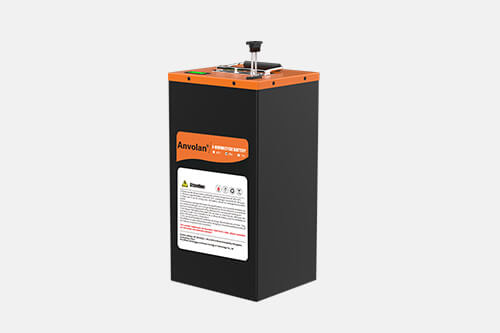
A 12V 100Ah lithium battery is a deep-cycle energy storage unit widely used in off-grid power storage, RV, marine vessels and small equipment power supply systems, commonly built with LiFePO4 cells. Compared with traditional lead-acid batteries, it delivers higher energy density and lighter weight and supports deep discharge. It is widely adopted for off-grid solar systems, marine equipment, recreational vehicles and emergency backup power supplies. Rated at 12V with a capacity of 100Ah, this storage unit stores roughly 1280Wh of energy. It fits low and medium power DC power applications and can directly replace lead-acid batteries of the same specification without large-scale rewiring, reducing engineering work for system upgrades.
The whole battery pack is assembled with Grade A large-format LiFePO4 cells. Cells are screened before delivery to guarantee consistency in internal resistance, capacity and voltage, mitigating the widening voltage difference between individual strings after repeated charge and discharge cycles. LiFePO4 material features good thermal stability; under overload, vibration and high-temperature conditions, the risk of thermal runaway is much lower than other lithium chemistries, making it suitable for outdoor and mobile equipment. A built-in battery management system, or BMS, monitors voltage, current and temperature of every cell string in real time and provides protection against overcharge, over-discharge, overcurrent, short circuit, high and low temperature to prevent permanent cell damage under abnormal working conditions. Some versions support Bluetooth communication, allowing maintenance teams to read battery SOC, cell temperature, health status and fault logs via mobile terminals for centralized monitoring of multiple battery packs.
The housing structure is designed for demanding outdoor operating environments. The battery enclosure is generally constructed from high-strength flame-retardant ABS plastic with dust and water resistance to block rainwater and dust from entering the interior. Cells are secured with elastic buffer brackets to absorb continuous vibration caused by vehicle movement or hull rocking and reduce the risk of loose terminals. Heat dissipation channels are reserved inside the casing to dissipate heat during continuous high-current discharge, control cell temperature rise and preserve long-term cell consistency. Battery output terminals are reinforced and fitted with M8 bolt connectors for fast cable connection and reduced connector overheating. The outer dimensions match the mounting compartments of conventional lead-acid batteries, enabling direct battery replacement and cutting down equipment modification work.
During specification selection and system configuration, engineers must evaluate load power and operating environment comprehensively. The 12V DC platform suits low-power DC loads. Users can connect multiple battery packs in series or parallel to expand total capacity and voltage according to energy storage requirements. Series connection raises system voltage while parallel connection increases total capacity. However, series-parallel setups must use batteries from the same batch with identical health status; mixing old and new cells will trigger imbalance issues. In regions with year-round high temperatures, heat dissipation conditions must be carefully assessed to prevent accelerated capacity degradation by heat. In cold environments, the low-temperature charging protection function of the BMS prevents charging at excessively low temperature and protects cells from damage. Before shipment, batteries undergo reliability tests including vibration, temperature cycling, impact and water immersion. Prior to mass delivery, products pass UN38.3, CE and other safety and transportation certifications to satisfy cross-border export and local market access requirements.
From the perspective of total lifecycle cost, this battery shows outstanding long-term economic benefits. Traditional lead-acid batteries have limited cycle life, and capacity fades rapidly after deep discharge, requiring frequent replacement and generating continuous costs for procurement, disassembly and labor. LiFePO4 cells support thousands of deep charge-discharge cycles. With proper operation, service life is greatly extended and battery replacement frequency drops. Although upfront procurement cost is higher, lower replacement expenses and fewer downtime losses gradually offset the initial investment. For off-grid solar projects, power generated by photovoltaic panels in daytime is stored inside the battery to supply power at night and reduce reliance on the utility grid. For marine vessels and RVs, its lightweight characteristic lowers overall vehicle weight, cuts power consumption and improves range. Charging must use dedicated lithium battery chargers to control charging voltage and current and ensure charging efficiency while protecting cells.
Routine maintenance and operating habits directly determine the service life of the battery. Operators should recharge the battery timely when state of charge falls to a reasonable level and avoid fully draining power. Regularly inspect the casing for dents and deformation, check terminals for looseness and oxidation, keep the housing surface clean and prevent long-term accumulation of sewage and dust. Maintenance teams rely on data collected by the BMS to continuously monitor battery health, predict cell aging in advance and schedule preventive maintenance to avoid unexpected breakdown during use. When stored for extended periods, the battery should be kept in dry and ventilated locations at a proper state of charge. Long-term full-charge storage or deep depletion storage must be avoided. Storage temperature should be kept within a moderate range to reduce capacity loss caused by self-discharge.
Against the fast-growing distributed small-scale energy storage market, the 12V 100Ah lithium battery delivers flexible and reliable energy storage solutions for various medium and small DC power supply scenarios. Equipped with stable LiFePO4 cells, intelligent BMS protection and integrated shockproof & waterproof PACK design, this battery fits solar off-grid systems, marine vessels, RVs and emergency backup power supplies and supplies stable DC power. Proper model selection, standardized charging and regular maintenance can fully leverage its advantages of long cycle life, light weight and high safety and reduce total lifecycle operating cost of energy storage systems. This type of storage unit simplifies construction of small off-grid power supply systems, provides stable energy support for power supply in remote areas, mobile travel equipment and marine power projects, and promotes the adoption of small-scale DC energy storage systems.
Be the first to receive our latest news, how-to user guides,
and exclusive deals! Subscribe now.

 Headquarter Address:10F, Building 25, N0. 179 Fengguan, Dongshen Road, Dongguan, Guangdong
 Factory Address:Building 3, Area D, Shengyang Science and Technology Industrial Park, East District of Suichuan County Industrial Park, Ji'an, Jiangxi
 Headquarter Telephone No.:+86 769 2366 8529
Factory Telephone No.:+86 796 6111618
 Contact Person:Kevin Chen
 Email Address:chen@xpower-world.com