Global layout
 +86 769 2366 8529




Time:2026-09-15 Views:115
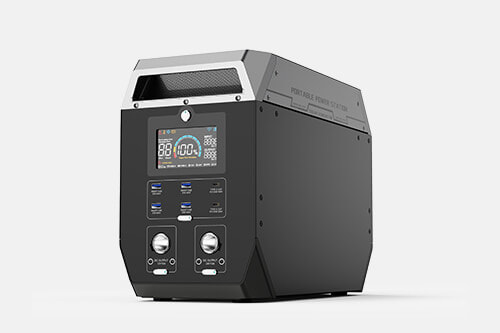
With the popularization of outdoor operations, temporary construction, emergency repair and off-grid industrial scenarios, 1200W industrial power stations have gradually replaced traditional small diesel generators and become the mainstream power supply solution for temporary power supply at industrial sites. Many purchasers only compare the quotation of equipment in the selection stage, ignoring hidden costs such as energy consumption, maintenance, fuel, labor and shutdown losses throughout the whole life cycle. From an economic perspective, manufacturers of 1200W industrial power stations are not only equipment suppliers, but also solution partners that help industrial customers control comprehensive power consumption costs, optimize capital investment and reduce operational risks. The manufacturer’s design capability, mass production technology, quality control system and after-sales guarantee directly determine the total cost of ownership (TCO) of end users over several years of use. An in-depth analysis of the economic differences brought by manufacturers can provide objective cost decision-making basis for engineering companies, mines, infrastructure and emergency operation and maintenance teams for equipment procurement.
Traditional industrial temporary power supply has long relied on diesel generators, whose cost structure is complex with continuous expenditure. Apart from relatively high procurement costs, small diesel generator sets with equivalent output power continuously incur fuel fees, oil filter maintenance fees and regular maintenance labor costs. Aging and corrosion will occur when equipment is idle. In scenarios such as field construction sites, municipal emergency repair and field inspection, fuel transportation, oil storage and fire protection management will generate additional supporting costs. Diesel units produce loud startup noise and exhaust emissions, which are restricted in urban areas, enclosed spaces and night operation scenarios. Once work is suspended due to non-compliance, heavy construction period losses will be incurred. In contrast, the 1200W industrial power station uses lithium batteries as the energy carrier, with no fuel consumption, almost no noise and zero exhaust emissions during operation, adapting to various restricted scenarios such as urban construction, indoor maintenance and field emergency response. Whether the final cost advantage can be realized largely depends on the product positioning, cell selection, BMS design and mass production capacity of industrial power station manufacturers.
In terms of one-time procurement cost, professional manufacturers of 1200W industrial power stations dilute the unit manufacturing cost through large-scale mass production and balance hardware configuration and product pricing. Although consumer-grade energy storage products have lower price tags, their cells, inverters and shell protection grades are designed according to civil standards. They cannot adapt to harsh industrial working conditions including vibration, high and low temperature, dust and repeated high-power impact at industrial sites. Inverter failures and accelerated cell degradation are prone to occur in a short time. Although it seems to save money in procurement, the replacement frequency is high and the long-term comprehensive investment is higher. Formal industrial energy storage manufacturers adopt vehicle-grade lithium iron phosphate cells, matched with highly reliable power frequency or high-frequency inverter modules. The whole machine has IP54 or higher dustproof and waterproof protection and can withstand frequent high-power charge and discharge. Relying on bulk centralized cell procurement, standardized assembly lines and automated aging tests, manufacturers can control the unit watt-hour cost within a reasonable range while ensuring industrial reliability. Meanwhile, professional manufacturers support mass customization, and can adjust interface configuration, output protocol and battery capacity according to customer requirements, avoiding capital waste caused by customers purchasing redundant configurations and reducing ineffective asset investment from the source.
Whole-life operation and maintenance cost is the core indicator to distinguish the economic performance of products from different manufacturers, and also the most easily ignored link for industrial customers. Power stations produced by non-professional manufacturers adopt simple BMS protection logic, lacking complete functions such as temperature equalization, overcurrent early warning and fault recording. Under the scenario of repeated high-power discharge in industry, the consistency of cells deteriorates rapidly, capacity decays quickly and the failure rate rises significantly. Once a fault occurs, small ordinary manufacturers lack spare parts reserves and on-site maintenance teams, resulting in long equipment repair cycles, power outages and construction shutdowns on site, which bring huge indirect economic losses. Professional manufacturers of industrial power stations optimize the architecture from the perspective of operation and maintenance economy in the product design stage. The built-in intelligent BMS continuously monitors the voltage, temperature and internal resistance of each cell string, actively performs cell equalization to slow down capacity attenuation and extend the battery cycle life. The whole machine adopts a modular design; inverters, battery packs and communication interfaces can be disassembled and replaced independently. Fault repair does not require returning the whole machine to the factory. Spare parts can be quickly replaced on site to greatly shorten downtime. Manufacturers are equipped with complete spare parts warehouses and remote fault diagnosis systems, providing long-term technical support and reducing hidden costs including maintenance labor, logistics and shutdown losses. With long-term use, equipment with low failure rate and long service life can significantly reduce annual operation and maintenance expenditure.
Energy consumption and usage cost are continuous expenses generated in daily operation, and the hardware design of manufacturers directly determines the charge and discharge efficiency of power stations. Low-quality products have low inverter conversion efficiency and large electric energy loss during charge and discharge. A large amount of electric power will be wasted in each charging process, increasing electricity expenses over time. Professional industrial manufacturers optimize the inverter topology structure, and the inverter conversion efficiency of the 1200W model can reach more than 94% to reduce energy loss during charging and discharging. Meanwhile, the product supports dual input modes of photovoltaic charging and mains power supply. It can be matched with solar panels to use free solar energy for power replenishment in industrial field scenarios, greatly reducing mains charging costs. For customers engaged in long-term field operations, the photovoltaic energy replenishment mode can greatly reduce dependence on external power supply and reduce supporting investment such as diesel transportation and mains access. In scenarios where multiple devices are used in rotation, the manufacturer’s standardized communication protocol can realize parallel management of multiple units, facilitating customers to schedule energy storage resources uniformly, improve power utilization efficiency and further cut power consumption costs.
Asset residual value and scrapping disposal cost are also important parts of economic evaluation, and differences in cell schemes of different manufacturers will lead to residual value gaps. Consumer-grade energy storage products mostly use ordinary cells with poor consistency. After the end of service life, they have low cascade utilization value, complicated scrapping procedures and additional disposal fees. Professional industrial energy storage manufacturers adopt lithium iron phosphate cells with excellent consistency. After the battery pack reaches the designed service life, the cells still have cascade utilization value, which can be disassembled and reassembled for small energy storage and low-speed power supply equipment. The battery residual value is higher and can hedge the initial procurement investment. Products from formal manufacturers comply with relevant domestic battery recycling specifications. Some leading manufacturers can provide waste battery recycling services, reducing customers’ battery scrapping disposal costs and avoiding the risk of environmental fines caused by non-compliant disposal.
In summary, when selecting a 1200W industrial power station, it is not enough to simply compare equipment quotations. It is necessary to evaluate the comprehensive strength of manufacturers from the perspective of full-life-cycle economy. Excellent industrial power station manufacturers reduce customers’ multi-dimensional costs including procurement, operation and maintenance, energy consumption, shutdown losses and scrapping disposal through mature product design, large-scale production and sound after-sales systems. With the continuous expansion of markets for temporary power supply, field operation and emergency support, industrial power station manufacturers will continuously optimize inverter efficiency, battery cycle life and modular maintenance design to further reduce the comprehensive power consumption cost of industrial users. Against the background of fluctuating diesel prices and stricter environmental control, 1200W power stations produced by professional industrial manufacturers will continue to deliver better economic power supply solutions for infrastructure, emergency response, field inspection and other industries.
Be the first to receive our latest news, how-to user guides,
and exclusive deals! Subscribe now.

 Headquarter Address:10F, Building 25, N0. 179 Fengguan, Dongshen Road, Dongguan, Guangdong
 Factory Address:Building 3, Area D, Shengyang Science and Technology Industrial Park, East District of Suichuan County Industrial Park, Ji'an, Jiangxi
 Headquarter Telephone No.:+86 769 2366 8529
Factory Telephone No.:+86 796 6111618
 Contact Person:Kevin Chen
 Email Address:chen@xpower-world.com