Global layout
 +86 769 2366 8529




Time:2026-09-17 Views:163
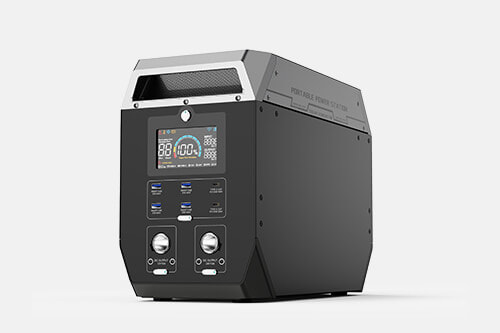
As a benchmark model of medium-power portable energy storage, the 1200W power station takes power density, output stability, full-range safety and scenario adaptability as core R&D indicators during the design phase. Targeting the pain points of diverse application scenarios such as complex outdoor working conditions, household emergency backup power, vehicle-mounted power supply, camping power supply and equipment maintenance power supply, it achieves comprehensive self-developed optimization in circuit architecture, cell system, temperature control protection and intelligent algorithms. It thoroughly solves the industry defects of traditional outdoor power supplies such as inflated power marking, waveform distortion, high-temperature power drop, failure to start at low temperature, disordered interfaces and fast capacity attenuation, realizing a technical balance of high-power output, high energy density, long durability and extreme safety. It is a new-generation standardized energy storage product suitable for both civilian portable use and light industrial power supply scenarios.
In terms of core power system R&D, the product adopts a self-developed lithium iron phosphate cell integration solution. With high-density cell stacking technology and precise series-parallel matching technology, it realizes large-capacity energy storage layout in a compact body, balancing lightweight design and long battery life. The R&D team optimizes the cell discharge rate curve according to the 1200W continuous power output characteristics to match the steady-state output demand of the equipment, while reserving sufficient peak power redundancy to withstand the instantaneous impact load during electrical startup, effectively avoiding overload tripping caused by the startup of compressor-based appliances. Equipped with a self-developed high-precision BMS battery management system, it monitors the voltage, current and temperature of each cell in real time, realizes intelligent balanced charging and discharging, accurately corrects voltage difference deviation, greatly delays cell aging, improves cycle service life, and ensures long-term stable power supply without significant capacity attenuation from the bottom layer.
The inverter circuit architecture is the core focus of this R&D optimization. The equipment is equipped with a fully self-developed pure sine wave bidirectional inverter module, abandoning the design defects of traditional modified wave and simple inverter circuits. Through multi-stage filtering, impedance calibration and waveform correction algorithms, the output waveform purity is comparable to municipal power standards. It can perfectly adapt to power-sensitive loads such as drones, precision instruments, digital devices and medical small household appliances, eliminating equipment failures and data abnormalities caused by harmonic interference and unstable voltage. During the R&D stage, the wide-range voltage stabilization technology is optimized for high and low voltage fluctuation conditions, continuously locking stable output voltage during dynamic cell voltage changes, avoiding sudden voltage drop and frequency offset when high-power loads are connected, and ensuring stable and reliable power supply throughout long-term high-power continuous operation.
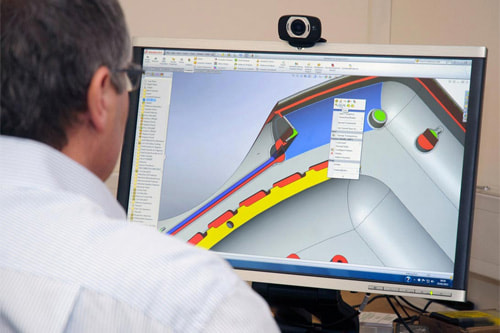
The thermal management and safety protection system adopts an integrated self-developed architecture. Combining fluid simulation and mold flow analysis, the R&D team customizes a dedicated air duct heat dissipation structure to build a full-range three-dimensional heat dissipation channel, accurately guiding and discharging heat generated by inverter and cell operation, avoiding heat accumulation, effectively reducing temperature rise under high-load operation, and eliminating hidden dangers such as high-temperature power reduction and thermal runaway. Meanwhile, it is equipped with multiple active safety protection mechanisms, integrating overvoltage, undervoltage, overcurrent, short circuit, overload, high temperature and low temperature protection functions, covering the whole working scenarios of charging, discharging, standby, fast charging and inversion. Aiming at outdoor environments with rain, dust and alternating high and low temperatures, the sealed structure and material selection are optimized to improve the overall weather resistance, enabling stable start and operation in a wide temperature range and adapting to complex and variable outdoor working conditions.
In terms of intelligent control and scenario-adaptive R&D, the equipment adopts a self-developed MPPT photovoltaic fast charging algorithm and MCU main control system, greatly improving solar power tracking efficiency, adapting to outdoor photovoltaic energy supplementation scenarios and realizing green and efficient self-charging. The whole machine integrates multi-interface intelligent time-sharing power supply logic, with independent control of AC, DC, Type-C and USB multi-channels, supporting simultaneous multi-channel output without mutual interference, solving the problems of power attenuation and interface mutual interference when multiple ports of traditional devices are turned on simultaneously. The whole R&D process passes strict reliability tests including high and low temperature cycling, full-load aging, shock vibration and short-circuit fault tolerance to calibrate all performance parameters. With self-developed circuit architecture, reliable safety system and full-range scenario adaptability, the 1200W power station achieves all-round upgrades in performance, safety and durability, providing a stable, pure and safe high-power energy storage solution for outdoor operations, household emergency use, field camping and mobile power supply scenarios.
Be the first to receive our latest news, how-to user guides,
and exclusive deals! Subscribe now.

 Headquarter Address:10F, Building 25, N0. 179 Fengguan, Dongshen Road, Dongguan, Guangdong
 Factory Address:Building 3, Area D, Shengyang Science and Technology Industrial Park, East District of Suichuan County Industrial Park, Ji'an, Jiangxi
 Headquarter Telephone No.:+86 769 2366 8529
Factory Telephone No.:+86 796 6111618
 Contact Person:Kevin Chen
 Email Address:chen@xpower-world.com