Global layout
 +86 769 2366 8529




Time:2026-05-19 Views:160
Frequency Perspective Analysis: High-frequency Service Performance Advantages of 105Ah 51.2V Golf Cart Battery
1. Preface: High-frequency Usage Scenarios Test Battery Tolerance
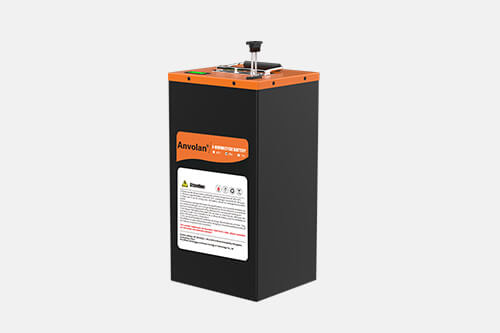
Golf carts in golf courses, scenic spots and resort manors are characterized by high usage frequency, frequent start-stop and long continuous working hours. Commercial golf fleets have a large daily departure volume. Each cart can travel dozens of times a day with frequent starting, braking and low-speed climbing. Combined with the cyclic mode of uninterrupted discharging during the day and centralized charging at night, it puts forward strict requirements on the battery's frequency resistance, discharge stability and anti-attenuation capability. Traditional lead-acid batteries are suitable for low-frequency usage scenarios. They are prone to problems such as sudden voltage drop and rapid capacity fading under high-frequency operating conditions, and frequent battery replacement greatly increases operating costs. From a pure usage frequency perspective, this paper deeply analyzes the optimized design of the 105Ah 51.2V special lithium battery for golf carts targeting frequent start-stop, high-frequency charging and discharging, and fleet high-frequency shift operation, and explores its core advantages of anti-fatigue attenuation and stable high-frequency power supply, providing battery selection reference for commercial high-frequency fleets. Adopting 16-cell lithium iron phosphate cells, this battery has a rated voltage of 51.2V and a capacity of 105Ah, with an energy storage capacity of up to 5376Wh. Its large capacity adapts to the demand for high-frequency continuous vehicle usage.
2. Start-stop Frequency: Withstand Frequent Start-stop Without Power Attenuation
Golf carts run at low speed with frequent turning, parking and climbing. A single cart can start and stop more than a hundred times a day. Repeated fluctuation of instantaneous current will easily cause cell polarization and power weakness of ordinary batteries after long-term frequent start-stop. Optimized for high-frequency start-stop working conditions, this 105Ah 51.2V lithium battery adopts high-stability lithium iron phosphate cells with stable electrochemical properties, which can withstand high-density current pulse impact without being affected by frequent start-stop current fluctuation. Even with more than one hundred start-stop operations a day, the battery maintains stable voltage output without starting stuttering or insufficient climbing power.
Equipped with a built-in intelligent BMS management system, the battery adopts a dynamic current regulation program to accurately buffer current peaks at the moment of frequent start-stop and avoid cell damage caused by instantaneous high current impact. Different from lead-acid batteries that suffer from rapid voltage drop and sharp power decline after high-frequency use, this lithium battery delivers linear and stable power output without obvious attenuation during continuous frequent start-stop. It is perfectly suitable for high-intensity and high-frequency usage scenarios such as passenger transportation, event commuting and site inspection on golf courses, ensuring consistent power performance in every start, acceleration and climbing process.
3. Charge-discharge Frequency: Adapt to High-frequency Cycles and Delay Battery Aging Loss
Commercial golf fleets generally adopt a high-frequency charge-discharge mode, operating uninterruptedly during the day and being charged centrally after work. Some busy golf courses even require daily charging and short-distance supplementary charging. Frequent charging and discharging will accelerate the aging of ordinary batteries and shorten their service life. Optimized cell formula is adopted for this lithium battery to improve the ion conduction efficiency inside the cells. It supports shallow charging and discharging as well as frequent supplementary charging without deliberate deep discharge, adapting to the flexible charging rhythm of golf courses. Unlike lead-acid batteries that require full charge for storage and are prone to vulcanization and scrapping after frequent shallow charging, this lithium battery adapts to daily high-frequency charge-discharge cycles without vulcanization and polarization problems.
In terms of cycle life, the battery can achieve more than 3,000 cycles under conventional working conditions, and can work stably for 8 to 10 years even in the daily high-frequency charging commercial scenario. The BMS system has a built-in cell balancing function to automatically balance the voltage of single cells during each charging process, avoiding cell voltage difference imbalance caused by high-frequency charging and discharging and slowing down the capacity attenuation rate. The measured data shows that after 1,000 consecutive high-frequency charge-discharge cycles, the remaining capacity of the battery can still remain above 85%, which is far better than the capacity retention rate of less than 50% of lead-acid batteries under the same working conditions, greatly reducing the battery replacement frequency in high-frequency usage scenarios.
4. Fleet Usage Frequency: Large Capacity Supports Batch High-frequency Shift Operation
Large-scale golf courses usually have dozens of carts with high vehicle density and high endurance requirements. Ordinary small-capacity batteries have insufficient endurance and require frequent midway power replacement, seriously affecting operational efficiency. With 105Ah ultra-large capacity and 51.2V rated voltage, the battery has sufficient energy storage. A fully charged single battery can run continuously for 8 to 10 hours, adapting to uninterrupted shift operation throughout the day. It eliminates the need for midway charging and reduces the energy replenishment frequency during high-frequency usage, fundamentally optimizing the fleet operation rhythm.
Meanwhile, the battery has excellent consistency and is compatible with centralized fleet management mode. When multiple batteries are used synchronously at high frequency, there is no individual capacity difference or power supply deviation. The driving speed and power performance of each cart in the fleet remain consistent, adapting to the standardized operation of golf courses. The battery shell is made of high-strength flame-retardant material with shock and compression resistance. It is not easy to be damaged and the cells are not easy to shift under bumpy vibration during high-frequency driving. It maintains a stable working state during the high-frequency circulation of the fleet and reduces the probability of equipment failure and shutdown.
5. Operation and Maintenance Frequency: Low-maintenance Design Reduces Inspection Times
High-frequency commercial equipment will incur high labor and time costs if maintenance is complicated. Traditional lead-acid batteries require regular electrolyte supplementation and terminal cleaning with monthly maintenance, and the maintenance frequency needs to be doubled in high-frequency usage environments. Adopting an integrated fully sealed structure, this 105Ah 51.2V lithium battery requires no water addition or liquid replenishment without corrosion and liquid leakage risks. The terminals adopt anti-corrosion copper-plated technology to avoid oxidation and rust after long-term high-frequency use. Under conventional conditions, the annual maintenance times are no more than twice, which greatly simplifies the maintenance process and reduces manual inspection costs.
Equipped with an intelligent monitoring interface, the battery can real-time view data such as voltage, temperature and cycle times during high-frequency usage to accurately predict battery loss without frequent disassembly detection. Meanwhile, the built-in multiple protection mechanisms can automatically avoid faults such as short circuit, overheating and overcurrent during high-frequency usage, reducing the frequency of battery failure and repair. For commercial golf courses with high-frequency operation, the battery effectively cuts down later operation and maintenance expenses and improves the overall fleet operation efficiency with low maintenance and low failure rate.
6. Conclusion: High-frequency Adaptability Empowers Long-term Efficient Commercial Operation
Analyzed from the perspective of frequency usage, the 105Ah 51.2V golf cart battery accurately meets the core usage requirements of commercial golf courses for high-frequency start-stop, high-frequency charging and discharging, and fleet high-frequency operation. With four core advantages of frequent start-stop resistance, long cycle life, large-capacity long-lasting endurance and minimal maintenance, it thoroughly solves the pain points of traditional batteries such as easy attenuation, cumbersome maintenance and frequent replacement under high-frequency usage. Its stable electrochemical performance and intelligent protection system adapt to various complex high-frequency working conditions. It can not only ensure the usage experience of high-frequency daily leisure transportation, but also meet the demand of long-term high-intensity operation of large fleets in commercial golf courses. It is a preferred energy storage product for the upgrading of golf cart batteries in high-frequency usage scenarios.
Be the first to receive our latest news, how-to user guides,
and exclusive deals! Subscribe now.

 Headquarter Address:10F, Building 25, N0. 179 Fengguan, Dongshen Road, Dongguan, Guangdong
 Factory Address:Building 3, Area D, Shengyang Science and Technology Industrial Park, East District of Suichuan County Industrial Park, Ji'an, Jiangxi
 Headquarter Telephone No.:+86 769 2366 8529
Factory Telephone No.:+86 796 6111618
 Contact Person:Kevin Chen
 Email Address:chen@xpower-world.com