Global layout
 +86 769 2366 8529




Time:2026-07-07 Views:145
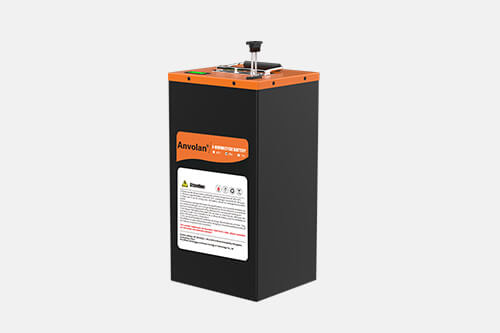
In scenarios such as urban and rural short-distance freight, daily travel, and stall delivery, 1000W electric tricycles have become essential tools for public daily transportation and income generation due to their moderate power, stable load-bearing and flexible operation. As the core power accessory of the vehicle, the 1000w electric tricycle litio batery directly determines the overall service cost, endurance and service life of the electric tricycle. Most users only focus on the initial selling price when purchasing batteries, ignoring long-term use loss, replacement frequency and energy consumption differences, and finally fall into the dilemma of "low price but high consumption and frequent replacement". From the perspective of cost performance, this paper combines the power adaptation characteristics of 1000W electric tricycles, comprehensively compares the long-term cost gap between lithium batteries and traditional lead-acid batteries, analyzes the cost-effective selection standards of lithium batteries, and shares cost-reducing and efficiency-improving use and maintenance skills. It helps ordinary users and individual merchants minimize costs, realize long-term and stable use of batteries, and maximize the comprehensive cost performance of vehicles.
To understand the cost performance advantages of 1000w electric tricycle litio batery, it is necessary to clarify the power adaptation logic of 1000W electric tricycles first. The 1000W motor is a medium and low power configuration, suitable for conventional scenarios such as daily load-bearing, flat road driving and short-distance climbing. It avoids the energy consumption waste of high-power motors and insufficient power of low-power motors, and has fixed adaptation requirements for the discharge stability and continuous power supply capacity of batteries. Although the matching traditional lead-acid batteries have low unit prices and their entry cost is only half of lithium batteries, they have prominent cost performance shortcomings. The cycle life of lead-acid batteries is only 300-500 times. Under normal high-frequency use, they will suffer from severe endurance attenuation, weak power and failure to charge after 1-2 years, and must be replaced completely. In contrast, the lithium batteries adapted to 1000W electric tricycles have a cycle life of more than 2000 times, and can be stably used for 4-6 years with proper maintenance without frequent replacement in the long run, boasting far better life cycle cost performance than lead-acid batteries.
The cost performance advantages of 1000w electric tricycle litio batery are more intuitive when calculated from the dimension of comprehensive long-term use cost. Taking the mainstream 48V20Ah battery specification in the market as an example, the lead-acid battery adapted to 1000W electric tricycles has a low one-time purchase cost, but a high annual replacement cost. Coupled with high daily charging energy consumption and rapid endurance attenuation, the annual comprehensive use cost remains high. On the contrary, although lithium batteries require higher initial investment, their charging conversion efficiency is over 95%, much higher than the 70% of lead-acid batteries, which saves electricity expenses effectively in long-term use. Meanwhile, the weight of lithium batteries is only one-third of lead-acid batteries. The lightweight body reduces motor load, cuts down vehicle power loss and component wear, and lowers overall vehicle maintenance costs. For users with high-frequency use such as distribution, stall operation and agricultural transportation, the stable endurance and no significant attenuation of lithium batteries can ensure daily normal operation, avoid work stoppages and economic losses caused by battery failures, bringing significant indirect cost performance advantages.
The core premise of high cost performance is accurate model selection. For the 1000w electric tricycle litio batery, blindly pursuing large capacity and high voltage should be avoided to prevent cost waste caused by performance surplus. The daily driving mileage of most ordinary users is 30-60 kilometers. The 48V20Ah and 48V32Ah lithium batteries are perfectly adapted to the power demand of 1000W motors, with sufficient power for starting and climbing, enough endurance to cover daily travel, moderate price, and are the most cost-effective basic options. If there are demands for high-frequency load-bearing and long-distance driving, the 60V20Ah specification can be selected. There is no need to blindly choose high-spec batteries with large capacity, as the excess performance cannot be exerted and will only increase purchase costs. Meanwhile, priority should be given to lithium iron phosphate 1000w electric tricycle litio batery. Compared with ternary lithium batteries, it has stronger high-temperature resistance, anti-attenuation performance and higher safety, adapts to the outdoor storage and high-temperature driving scenarios of electric tricycles, with lower failure rate and longer service life, reducing later maintenance and replacement costs. It is the most cost-effective battery category for civil electric tricycles.
Screening high-cost-performance batteries requires avoiding market low-price traps. Many low-cost brandless 1000w electric tricycle litio batery products seem preferentially priced, but actually have problems such as falsely marked capacity, inferior battery cells and no safety protection. They seem to save money but cause greater losses in use. High cost performance does not mean low price, but reasonable price, stable quality and perfect after-sales service. Regular high-quality cost-effective lithium batteries are equipped with complete BMS intelligent protection boards, with multiple protection functions including overcharge, overdischarge, overcurrent, short circuit, high and low temperature protection. They can adapt to the discharge rhythm of 1000W motors, prevent battery damage caused by current fluctuations during motor start-stop and climbing, and greatly reduce failure probability. Attention should also be paid to the waterproof and shockproof technology of batteries. Electric tricycles are mostly used outdoors with frequent bumpy roads and rainy riding. Battery packs with good airtightness can reduce failures caused by water seepage and vibration and lower maintenance frequency. Priority should be given to products with full-group warranty of no less than 3 years, avoiding the routine trick of only battery cell warranty, so as to reduce later maintenance costs and ensure long-term cost performance.
Scientific use and maintenance are the key to amplifying the cost performance and extending the service life of 1000w electric tricycle litio batery. Correct usage habits can prolong the battery service life by more than 2 years and greatly dilute the one-time purchase cost. Avoid deep power deficit and excessive full charge during daily charging. Charging can be carried out when the remaining power is 30%, and there is no need to fully charge the battery every time, as long-term full charge floating charging and power deficit storage will accelerate cell aging. Charging should be done in a dry and ventilated environment, avoiding high-temperature exposure and low-temperature extreme environments. Let the battery cool down after summer riding before charging, and choose indoor charging in winter to reduce cell loss. When the vehicle is left idle for a long time, store the battery with about 50% power and perform a shallow charge and discharge cycle every month to prevent battery dormancy and scrapping. Use original special chargers exclusively, avoid circuit damage caused by inferior chargers, reduce failure maintenance expenses, and maximize the use value of batteries.
In conclusion, evaluating the cost performance of batteries for 1000W electric tricycles should not only focus on the initial purchase price, but also pay attention to the life cycle cost, use stability, invisible loss and after-sales guarantee. Although the 1000w electric tricycle litio batery requires higher upfront investment, it completely avoids the drawbacks of lead-acid batteries such as frequent replacement, high energy consumption and unstable endurance by virtue of its core advantages of ultra-long service life, low energy consumption, low failure rate and low maintenance cost, with lower long-term comprehensive cost and better use experience. For users who use tricycles for a long time and frequently, selecting well-matched and high-quality lithium batteries with scientific maintenance is the most cost-effective investment, which can not only meet daily power and endurance demands, but also maximize long-term vehicle use cost savings.
Be the first to receive our latest news, how-to user guides,
and exclusive deals! Subscribe now.

 Headquarter Address:10F, Building 25, N0. 179 Fengguan, Dongshen Road, Dongguan, Guangdong
 Factory Address:Building 3, Area D, Shengyang Science and Technology Industrial Park, East District of Suichuan County Industrial Park, Ji'an, Jiangxi
 Headquarter Telephone No.:+86 769 2366 8529
Factory Telephone No.:+86 796 6111618
 Contact Person:Kevin Chen
 Email Address:chen@xpower-world.com