Global layout
 +86 769 2366 8529




Time:2026-07-02 Views:52
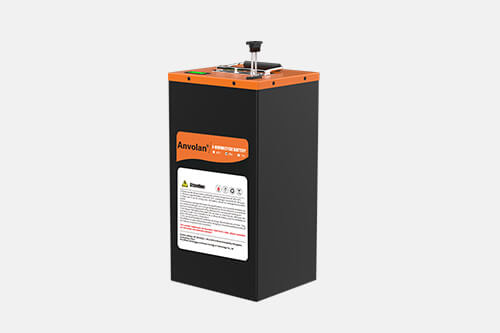
In the travel system of urban and rural short-distance transportation, household transportation and convenient distribution, 1000W electric tricycles have become mainstream tools for daily household transportation, township material transportation, urban small-piece distribution and market freight by virtue of the core advantages of moderate power, strong bearing capacity, simple operation, wide road condition adaptation and energy-saving economy. As the golden rated power of electric tricycles, 1000W perfectly balances power output, cruising range and energy consumption cost. It avoids the problems of insufficient load power and climbing stuttering of low-power motors, and eliminates the disadvantages of high energy consumption and expensive operation and maintenance costs of high-power motors, making it the optimal power specification suitable for dual civil and commercial scenarios. The core component that supports the long-term stable operation of 1000W motors and determines the overall vehicle power experience and service life is the 1000w electric tricycle litio batery (1000W electric tricycle lithium battery). Compared with traditional supporting lead-acid batteries, lithium batteries specially designed for 1000W working conditions can accurately match the discharge demand, torque output and load intensity of motors, fundamentally solving common industry pain points of traditional batteries such as virtual battery life, power attenuation, bulging and premature aging, cumbersome maintenance and low-temperature failure. Based on the exclusive working conditions of 1000W motors, this paper comprehensively analyzes the adaptation logic, performance advantages, specification selection, scenario value and refined maintenance schemes of 1000w electric tricycle litio batery, and deeply explains how lithium batteries maximize the overall performance of 1000W electric tricycles, providing professional, detailed and practical references for majority users, dealers and maintenance practitioners.
To understand the core value of lithium batteries for 1000W electric tricycles, it is necessary to clarify the exclusive operating conditions of 1000W motors first, which is the key difference between this specification battery and ordinary electric vehicle batteries and high-power tricycle batteries. The core application scenarios of 1000W electric tricycles focus on flat road load transportation, gentle slope passage, high-frequency start-stop and all-weather cyclic operation. The motor is characterized by constant torque output, stable discharge and intermittent high load operation. It does not require high instantaneous burst power during daily driving, but needs continuous and stable power support, putting forward strict and exclusive requirements for the continuous discharge stability, voltage smoothness, load tolerance and cycle durability of batteries. Ordinary lightweight lithium batteries adapted to 350W and 500W small electric vehicles have low discharge rate and small load capacity, which cannot match the continuous working current of 1000W motors. Long-term use will cause battery overload heating, voltage drop, power lag and premature cell aging. In contrast, high-rate lithium batteries adapted to 1500W and 2000W high-power tricycles have redundant specifications and high cost, resulting in performance waste and low cost performance for 1000W models. The exclusive 1000w electric tricycle litio batery is specially calibrated for working conditions, with discharge current, voltage platform and load threshold fully matching the rated parameters of 1000W motors. It can not only meet the power demand of load climbing and full-load driving, but also avoid performance redundancy and energy consumption waste, serving as the exclusive standard power configuration for 1000W electric tricycles.
For a long time, most 1000W electric tricycles are factory-equipped with traditional lead-acid batteries. Restricted by material and process shortcomings, lead-acid batteries cannot exert the golden performance of 1000W motors, becoming the biggest bottleneck for overall vehicle experience upgrading. Firstly, there is an imbalance in power matching. Traditional lead-acid batteries have poor voltage output stability, and the voltage drops rapidly during full-load driving and climbing, directly leading to insufficient torque and slow acceleration of 1000W motors. The load-bearing advantages of the original matched motor are greatly limited, and the problem of weak power is particularly prominent on township slope roads, community ramps and bridge decks. Secondly, there are shortcomings in cruising range and energy consumption. Lead-acid batteries have extremely low energy density, limited capacity per unit volume and large discharge loss. When matched with 1000W motors for high-frequency operation, the power decays rapidly, and the actual cruising range is far lower than the theoretical value. The cruising range will be halved in low-temperature winter environments, failing to meet the daily high-frequency transportation and all-weather travel needs. In terms of service life, the cycle charge and discharge times of traditional lead-acid batteries are only 300-500 times. The continuous medium-load discharge of 1000W motors will accelerate battery aging. Problems such as bulging, liquid leakage and power failure will occur after 1-2 years of normal use, requiring frequent battery replacement and resulting in high long-term operation and maintenance costs. At the same time, lead-acid batteries are extremely heavy, greatly increasing the overall weight of tricycles, further aggravating motor energy consumption, and forming a vicious cycle of "heavier load, faster power consumption and weaker power". In addition, lead-acid batteries require regular liquid replenishment and maintenance, which is time-consuming and labor-intensive with poor safety stability, gradually failing to adapt to the efficient and long-term use needs of modern 1000W electric tricycles.
The 1000w electric tricycle litio batery specially adapted to 1000W motor working conditions is fully optimized in terms of cell structure, discharge logic and protection system, perfectly fitting the operating characteristics of 1000W electric tricycles and realizing all-round upgrading over traditional lead-acid batteries. In terms of power adaptation, this lithium battery adopts a constant-current discharge scheme accurately matching 1000W motors, with stable and fluctuation-free voltage output and linear and smooth overall power output, which perfectly conforms to the constant torque output characteristics of 1000W motors. Whether for single-person daily transportation, full-load cargo transportation, continuous gentle slope climbing or bumpy road driving, the battery can continuously and stably output current without voltage drop, power stuttering and acceleration lag, completely releasing the load-bearing advantage and traffic capacity of 1000W motors. The power response speed of 1000W tricycles driven by lithium batteries is increased by more than 30% compared with lead-acid battery models, and the stability and efficiency of load driving are greatly improved, perfectly adapting to dual domestic and commercial scenarios.
The all-round upgrade of cruising capacity and energy efficiency is the most intuitive core advantage of 1000w electric tricycle litio batery. The energy density of lithium batteries is 3-4 times that of traditional lead-acid batteries, and the discharge strategy is optimized according to the energy consumption characteristics of 1000W motors, with greatly reduced invalid energy consumption loss. Mainstream lithium battery specifications such as 48V20Ah, 48V32Ah and 60V20Ah adapted to 1000W models can achieve more than 60% longer cruising range than lead-acid batteries of the same specification after a single full charge. The 48V32Ah large-capacity version can reach a single cruising range of 70-90 kilometers, completely meeting the cruising needs of all-day township transportation, high-frequency urban distribution and multiple daily trips, and eliminating the troubles of sudden power failure and frequent recharging. At the same time, lithium batteries have significant lightweight advantages, with only 1/3 of the weight of lead-acid batteries under the same capacity, which greatly reduces the overall weight of 1000W tricycles, effectively lowers motor operating load and extra energy consumption caused by vehicle weight, and forms a virtuous cycle of "light weight, low loss and long endurance". Especially in complex urban and rural road conditions, the lightweight body matched with stable lithium battery output not only achieves longer cruising range, but also greatly improves vehicle control flexibility, with lighter steering and smoother driving, optimizing riding and operation experience comprehensively.
Ultra-long service life and ultra-high cost performance make 1000w electric tricycle litio batery the optimal choice for long-term cost reduction and efficiency improvement of 1000W electric tricycles. Lithium batteries adapted to 1000W working conditions adopt automotive-grade lithium iron phosphate cells with high cell consistency, stable performance and strong anti-attenuation capability. Optimized specially for the medium-load and high-frequency cycle operation characteristics of 1000W motors, they effectively avoid premature cell aging caused by overload. Their cycle charge and discharge times can reach more than 2000 times, and the normal service life can reach 6-8 years under standardized use, 4-5 times that of traditional lead-acid batteries, completely getting rid of the trouble and high cost of annual battery replacement. Although the initial purchase cost of lithium batteries is slightly higher than that of lead-acid batteries, the long-term comprehensive operation and maintenance cost is greatly reduced due to no frequent replacement, extremely low failure maintenance rate and no regular liquid replenishment maintenance, with outstanding cost performance advantages. In addition, lithium batteries have an extremely low self-discharge rate with monthly power consumption less than 3%. The vehicle will not rapidly lose power and age after long-term idle parking, perfectly adapting to diverse usage rhythms such as low-frequency household transportation, high-frequency commercial operation and off-season long-term parking, effectively reducing idle loss and protecting the stable performance of 1000W tricycles for a long time.
The upgraded intelligent safety protection and strong environmental adaptability build a solid safety line for all-weather operation of 1000W electric tricycles. The 1000w electric tricycle litio batery is equipped with a customized exclusive BMS battery management system, precisely debugged according to the discharge current and load range of 1000W motors. It has eight intelligent protection functions including over-charging, over-discharging, over-current, short circuit, high temperature, low voltage, over-power and cell balance protection, which can real-timely monitor the working status of each cell 24 hours a day. Under special working conditions such as daily load overload, circuit abnormality, excessive charging and high-temperature operation, the system can automatically cut off power instantly to eliminate potential safety hazards such as battery bulging, short circuit and fire from the source, completely solving the problems of easy high-temperature failure, overload damage and insufficient protection of traditional lead-acid batteries. In terms of hardware, it adopts a fully sealed explosion-proof and flame-retardant shell, which has passed special tests of shock resistance, extrusion resistance, water and dust resistance and high and low temperature resistance. It can perfectly adapt to harsh environments such as bumpy vibration of complex urban and rural roads, rainwater washing, summer high-temperature exposure and winter low-temperature frost, operating stably in a wide temperature range from -20℃ to 60℃. The cruising attenuation in winter is far lower than that of lead-acid batteries, and thermal runaway is not easy to occur in summer, ensuring the safe and stable operation of 1000W electric tricycles all day long.
Accurate specification selection is the key to maximizing the performance of 1000W motors and giving full play to lithium battery advantages. For standard 1000W electric tricycles, the 48V voltage specification is the universal golden adaptation specification, suitable for most 1000W models for household transportation and light freight, with smooth power, economical energy consumption and strong compatibility, ideal for daily flat-road commuting and short-distance material transportation. For 1000W tricycles used in mountainous areas, slope-intensive sections and high-frequency heavy-load commercial scenarios, the 60V lithium battery specification is preferred, with higher voltage platform and sufficient power reserve, which can easily cope with high-intensity working conditions such as continuous climbing and full-load heavy load, further improving the overall vehicle traffic capacity and operation efficiency. In terms of capacity selection, household low-frequency users can choose the 20Ah basic capacity to meet daily short-distance travel needs; commercial high-frequency distribution and long-distance transportation users prefer 32Ah and above large-capacity versions to ensure ultra-long cruising range and reduce recharging frequency. It is important to note that 1000W motors are strictly prohibited from being matched with small-capacity and low-rate batteries, which will cause long-term battery overload and rapid performance attenuation. Meanwhile, blind selection of high-power redundant batteries is not allowed to avoid cost waste and increased energy consumption. Only the exclusive adapted 1000w electric tricycle litio batery can achieve the optimal balance of power, cruising range, cost and service life.
Refined daily maintenance can continuously lock the lithium battery performance of 1000W electric tricycles, greatly extend the battery service life and ensure long-term efficient motor operation. Special original chargers matching the voltage and current parameters of 1000W models must be used for charging, and mixed use of inferior and mismatched chargers is prohibited to prevent cell damage and protection system failure. Adhere to the principle of shallow charging and shallow discharging, replenish power in time when the remaining power is 20%-30% in daily use, and avoid deep power deficit static placement to effectively maintain cell activity and delay performance attenuation. When the vehicle is idle for a long time, keep the battery power in a healthy range of 50%-70% and replenish power regularly every 1-2 months to prevent increased internal resistance and cell aging and scrapping caused by long-term power deficit. During driving and operation, avoid frequent rapid acceleration, instantaneous full-load load and long-term continuous climbing to reduce battery loss caused by instantaneous high-current discharge. Regularly check the battery connection ports to keep them dry, firm, free of oxidation and water accumulation, ensure stable conductivity, and avoid heating and power failure caused by poor contact. Meanwhile, private disassembly and modification of batteries and cracking of BMS protection systems are strictly prohibited to prevent damaging the battery sealing structure and safety mechanism, causing safety accidents and losing warranty rights and interests. Standard maintenance habits enable the 1000W special lithium battery to operate stably for more than 8 years, continuously providing efficient, safe and stable power support for the whole vehicle.
Looking at the development trend of the civil electric tricycle industry, 1000W power models have always been the mainstream rigid market demand by virtue of balanced performance and ultra-high practicality. As the exclusive core power of this power model, 1000w electric tricycle litio batery is the key carrier to promote performance upgrading, cost reduction, efficiency improvement and long-term service of 1000W tricycles. The shortcomings of traditional lead-acid batteries such as high loss, short service life, high operation and maintenance cost and low safety can no longer adapt to the diverse needs of modern 1000W electric tricycles for efficient transportation and high-frequency commercial use. With accurate power adaptation, ultra-long cruising performance, lightweight vehicle optimization, durable cycle life and all-round safety protection, the exclusive lithium battery for 1000W working conditions completely solves various usage pain points of traditional models, and comprehensively improves the operation quality, operation efficiency and safety level of 1000W electric tricycles. Whether for daily household transportation, township material transportation, urban small-piece distribution or market short-distance freight, 1000w electric tricycle litio batery can accurately empower the whole vehicle, release the golden performance of 1000W motors, and achieve multi-dimensional breakthroughs in power, cruising range, safety and cost performance. In the future, with the continuous iteration of lithium battery technology, the special lithium batteries for 1000W electric tricycles will continue to optimize towards higher stability, faster fast charging, stronger weather resistance and lower loss, deeply cultivate civil short-distance travel and light freight scenarios, provide more worry-free, efficient and safe green travel solutions for hundreds of millions of users, and help the green, efficient and long-term upgrading of urban and rural short-distance transportation.
Be the first to receive our latest news, how-to user guides,
and exclusive deals! Subscribe now.

 Headquarter Address:10F, Building 25, N0. 179 Fengguan, Dongshen Road, Dongguan, Guangdong
 Factory Address:Building 3, Area D, Shengyang Science and Technology Industrial Park, East District of Suichuan County Industrial Park, Ji'an, Jiangxi
 Headquarter Telephone No.:+86 769 2366 8529
Factory Telephone No.:+86 796 6111618
 Contact Person:Kevin Chen
 Email Address:chen@xpower-world.com