Global layout
 +86 769 2366 8529




Time:2026-04-03 Views:27

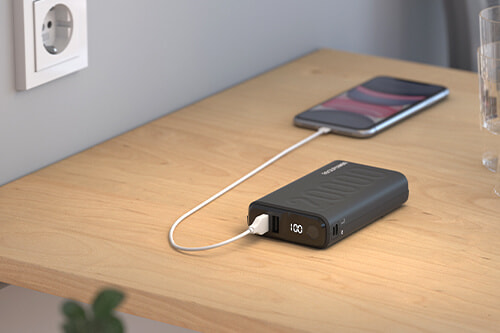
Waterproof and dustproof capabilities are increasingly important features for power banks, especially for users who use their devices outdoors, during travel, or in harsh environments. These capabilities are measured using the IP (Ingress Protection) rating system, which consists of two digits: the first digit indicates the level of dust protection, and the second digit indicates the level of water protection. Testing power banks for waterproof and dustproof capabilities involves rigorous procedures to ensure they can withstand specific levels of dust and water exposure without compromising performance or safety.
Dustproof testing focuses on preventing solid particles (such as dust, sand, or dirt) from entering the power bank, which can damage internal components like circuit boards and battery cells. The dustproof test is conducted in a controlled environment with a dust chamber, where the power bank is exposed to a specified concentration of fine dust for a set period (usually 8 hours). The test evaluates whether dust enters the device and affects its functionality. For example, an IP5X dust rating means the power bank is protected against dust that may interfere with its operation, while an IP6X rating means it is completely dust-tight, with no dust entering the device under any circumstances. After the test, the power bank is inspected for dust ingress and tested to ensure it can still charge devices normally.
Waterproof testing involves exposing the power bank to different levels of water exposure, depending on the intended IP rating. Common tests include splashing water (IPX4), spraying water (IPX5), immersing in water (IPX7 or IPX8), and exposure to high-pressure water jets (IPX6). For example, an IPX7 rating requires the power bank to be immersed in 1 meter of water for 30 minutes without any water ingress, while an IPX8 rating requires immersion in deeper water (usually 2 meters or more) for a longer period. During the test, the power bank is fully functional (e.g., charging a device) to simulate real-world use. After the test, the device is opened to check for water inside, and its performance is evaluated to ensure no damage has occurred. Additionally, some manufacturers conduct additional tests, such as saltwater exposure, to simulate marine environments, and temperature cycling tests to ensure the waterproof seals remain effective under extreme conditions. These tests are critical to ensuring that power banks with waterproof and dustproof capabilities can reliably perform in various environments, protecting users’ devices and the power bank itself from damage.
Be the first to receive our latest news, how-to user guides,
and exclusive deals! Subscribe now.

 Headquarter Address:10F, Building 25, N0. 179 Fengguan, Dongshen Road, Dongguan, Guangdong
 Factory Address:Building 3, Area D, Shengyang Science and Technology Industrial Park, East District of Suichuan County Industrial Park, Ji'an, Jiangxi
 Headquarter Telephone No.:+86 769 2366 8529
Factory Telephone No.:+86 796 6111618
 Contact Person:Kevin Chen
 Email Address:chen@xpower-world.com