Global layout
 +86 769 2366 8529




Time:2026-04-07 Views:11

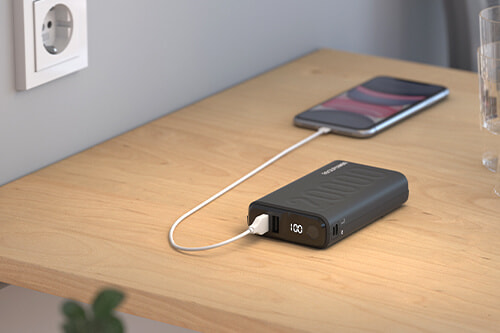
Output voltage and current matching is a core principle for ensuring efficient, safe, and fast charging when using a power bank, as mismatched parameters can not only reduce charging speed but also pose risks to both the power bank and the connected device. Voltage and current are two interdependent parameters: voltage provides the "pressure" to push electrical current through the charging cable, while current determines the amount of electrical charge transferred per unit time. For a power bank to charge a device optimally, its output voltage and current must align with the device’s required charging specifications.
Most modern electronic devices, such as smartphones, tablets, and laptops, have specific charging voltage and current requirements. For example, smartphones typically require a 5V voltage, but the current can vary from 1A (5W) for standard charging to 2A (10W) for basic fast charging, and even higher (e.g., 3A or 5A) for rapid fast charging. Laptops, on the other hand, often require higher voltages (e.g., 12V, 15V, or 20V) and higher currents to meet their larger power demands. If a power bank’s output voltage is lower than the device’s required voltage, the device may not charge at all, or the charging speed will be extremely slow. Conversely, if the output voltage is higher than the device’s rated voltage, it can cause overheating, damage to the device’s battery, or even short circuits, posing a safety hazard.
Current matching is equally important. If the power bank’s output current is higher than the device’s maximum acceptable current, the device’s internal charging circuit will automatically limit the current intake to protect itself, meaning the excess current capacity of the power bank is wasted and does not improve charging speed. If the output current is lower than the device’s required current, the charging process will be prolonged significantly. To address this, many modern power banks are equipped with intelligent voltage and current adjustment technology, which detects the connected device’s charging specifications and automatically adjusts the output parameters to achieve optimal matching. This technology not only ensures fast and efficient charging but also enhances the safety and lifespan of both the power bank and the device. In short, voltage and current matching is the foundation of safe and effective power bank use, and users should always check that their power bank’s output parameters are compatible with their devices.
Be the first to receive our latest news, how-to user guides,
and exclusive deals! Subscribe now.

 Headquarter Address:10F, Building 25, N0. 179 Fengguan, Dongshen Road, Dongguan, Guangdong
 Factory Address:Building 3, Area D, Shengyang Science and Technology Industrial Park, East District of Suichuan County Industrial Park, Ji'an, Jiangxi
 Headquarter Telephone No.:+86 769 2366 8529
Factory Telephone No.:+86 796 6111618
 Contact Person:Kevin Chen
 Email Address:chen@xpower-world.com