Global layout
 +86 769 2366 8529




Time:2026-04-03 Views:33

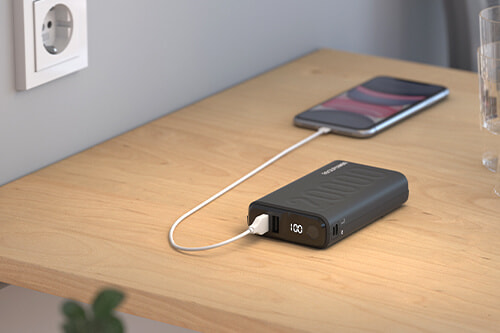
The material safety performance of power banks is of utmost importance, as it directly relates to the safety of users and their devices. Power banks consist of multiple components, including the outer casing, battery cells, circuit boards, and connecting cables, each of which requires specific material safety standards to prevent hazards such as overheating, short circuits, fires, or explosions. The outer casing, which is the first line of protection, must be made of materials that are flame-retardant, heat-resistant, and non-toxic, to withstand high temperatures and prevent the spread of fire in case of internal malfunctions.
Common materials used for power bank casings include ABS (Acrylonitrile Butadiene Styrene), PC (Polycarbonate), and aluminum alloy. ABS plastic is widely used due to its durability, impact resistance, and low cost, and it can be modified to be flame-retardant to meet safety standards. PC plastic is more heat-resistant and transparent, making it suitable for power banks with LED displays or sleek designs. Aluminum alloy casings offer better heat dissipation and a premium look, but they must be treated to prevent corrosion and ensure electrical insulation. All casing materials must comply with international safety standards, such as UL 94 (for flame retardancy) and RoHS (for restricting hazardous substances), to ensure they do not release toxic chemicals or catch fire easily.
The internal components, particularly the battery cells and circuit boards, also have strict material safety requirements. Lithium-ion or lithium-polymer battery cells, which are the core of the power bank, must be made of high-quality materials with stable chemical properties to prevent leakage, overheating, or thermal runaway. The electrolyte used in battery cells must be non-flammable or flame-retardant, and the battery casing must be strong enough to withstand physical damage. Circuit boards must use flame-retardant substrates and high-quality electronic components to prevent short circuits and overcurrent. Additionally, the connecting cables and ports must be made of materials that are durable and have good electrical conductivity, to avoid overheating due to poor contact. Manufacturers must conduct rigorous testing on all materials to ensure they meet safety standards, and regular quality control checks are essential to maintain consistency. In summary, the material safety performance of power banks is a comprehensive requirement that covers all components, and compliance with international standards is crucial to ensure user safety.
Be the first to receive our latest news, how-to user guides,
and exclusive deals! Subscribe now.

 Headquarter Address:10F, Building 25, N0. 179 Fengguan, Dongshen Road, Dongguan, Guangdong
 Factory Address:Building 3, Area D, Shengyang Science and Technology Industrial Park, East District of Suichuan County Industrial Park, Ji'an, Jiangxi
 Headquarter Telephone No.:+86 769 2366 8529
Factory Telephone No.:+86 796 6111618
 Contact Person:Kevin Chen
 Email Address:chen@xpower-world.com