Global layout
 +86 769 2366 8529




Time:2026-04-17 Views:42

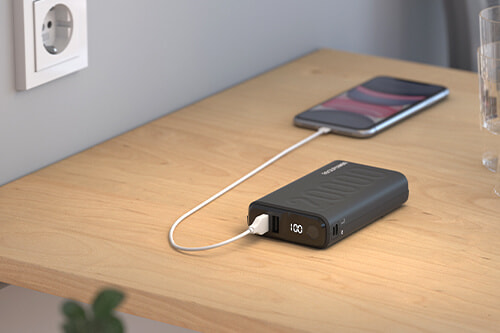
The low-temperature charging performance of power banks is largely determined by the characteristics of their internal lithium-ion batteries, as the chemical reactions within the batteries are highly sensitive to temperature changes. Most lithium-ion power banks are designed to operate optimally within a temperature range of 0°C to 40°C, and when the ambient temperature drops below 0°C, their charging performance will degrade significantly, and in extreme cases, charging may even stop entirely. This is because low temperatures slow down the migration speed of lithium ions in the battery, reduce the conductivity of the electrolyte, and increase the internal resistance of the battery, making it difficult for the charging current to pass through and thus reducing the charging efficiency.
At temperatures between -10°C and 0°C, power banks usually experience a 10% to 20% temporary loss of usable capacity, and the charging speed may be reduced by half or more compared to room temperature. For example, a power bank that can be fully charged in 3 hours at 25°C may take 7 to 8 hours to fully charge at -5°C, and the actual available capacity after charging will also decrease. When the temperature drops below -20°C, severe efficiency loss will occur, and most power banks will activate the built-in protection mechanism to stop charging to avoid permanent damage to the battery caused by lithium plating—a phenomenon where lithium ions fail to insert into the electrode material and instead deposit on the surface of the electrode, which can pierce the separator and cause short circuits.
Some advanced power banks equipped with low-temperature heating management systems, such as those using shape memory alloy temperature control switches, can effectively improve low-temperature charging performance. These systems automatically activate the heating sheet when the temperature drops to a preset value, raising the battery temperature to the normal charging range, thereby reducing capacity loss and ensuring charging safety. However, even with such technologies, the charging efficiency in extremely cold environments (below -30°C) is still difficult to reach the level of room temperature, and the long-term use of power banks in low-temperature environments will still accelerate battery aging and shorten their service life.
Be the first to receive our latest news, how-to user guides,
and exclusive deals! Subscribe now.

 Headquarter Address:10F, Building 25, N0. 179 Fengguan, Dongshen Road, Dongguan, Guangdong
 Factory Address:Building 3, Area D, Shengyang Science and Technology Industrial Park, East District of Suichuan County Industrial Park, Ji'an, Jiangxi
 Headquarter Telephone No.:+86 769 2366 8529
Factory Telephone No.:+86 796 6111618
 Contact Person:Kevin Chen
 Email Address:chen@xpower-world.com