Global layout
 +86 769 2366 8529




Time:2026-05-07 Views:196

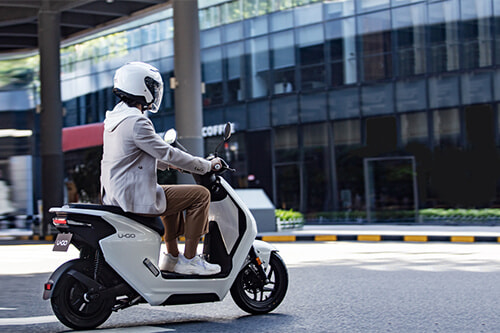
Choosing a suitable battery for an E-motorcycle is a critical decision that directly affects the vehicle’s performance, safety, service life, and riding experience. With the diversification of E-motorcycle models and battery technologies, consumers and manufacturers need to comprehensively consider multiple factors, including battery type, voltage and capacity, usage scenarios, safety performance, and cost-effectiveness, to avoid blind selection. The core principle of selection is to match the battery’s performance with the E-motorcycle’s positioning and actual usage needs, ensuring both stable power output and long-term reliability.
First, it is necessary to determine the appropriate battery type based on usage scenarios and needs. Currently, the mainstream E-motorcycle batteries on the market are mainly lead-acid batteries, ternary lithium (NCM) batteries, and lithium iron phosphate (LFP) batteries. Lead-acid batteries are suitable for low-speed commuter E-motorcycles and users with limited budgets; they have the advantages of low cost, mature technology, and high recyclability, but their shortcomings are obvious, such as large weight, short cycle life (usually 350-800 cycles), and poor low-temperature performance (capacity decays to 60% below 0℃). Ternary lithium batteries are suitable for mid-to-high-end E-motorcycles that pursue lightweight and long range; they have high energy density (200-300 Wh/kg), fast charging speed, and light weight (only one-third of lead-acid batteries of the same capacity), but their safety is slightly lower, and the cost is higher. Lithium iron phosphate batteries are ideal for high-performance and safety-focused E-motorcycles, such as high-speed electric motorcycles and off-road models; they have high safety (no fire or explosion risk), long cycle life (more than 1000 cycles), and good high-temperature stability, but their energy density is slightly lower than that of ternary lithium batteries, and the weight is slightly higher.
Second, the voltage and capacity of the battery need to be matched with the E-motorcycle’s motor power. The voltage of E-motorcycle batteries is usually divided into 48V, 60V, 72V, and 96V+, among which 48V is suitable for low-power E-motorcycles (≤1000W), 60V is suitable for medium-power models (1000-2000W), and 72V and above are suitable for high-power models (≥2000W). For example, a 400W commuter E-motorcycle can choose a 48V 20Ah lead-acid battery, an 800W takeout E-motorcycle is suitable for a 60V 50Ah lithium iron phosphate battery, and a 1500W high-speed E-motorcycle needs a 72V 60Ah high-performance lithium battery. In addition, the capacity of the battery directly determines the vehicle’s range; generally, the range can be roughly calculated according to the formula: range (km) = (battery capacity (Ah) × voltage (V)) / (vehicle power consumption (Wh/km)). It is recommended to choose a battery with a capacity 10%-20% higher than the actual range demand to avoid insufficient range due to battery aging.
Finally, other key factors need to be considered, including safety performance, BMS quality, and compliance certification. The battery should have complete safety protection functions, such as overcharge, over-discharge, over-current, and short-circuit protection, and pass relevant certifications (such as 3C certification in China, UL certification in the United States, and CE certification in the European Union). A high-quality BMS can effectively manage the battery’s charge and discharge process, balance the voltage of each cell, and extend the battery’s service life. At the same time, factors such as charging environment and maintenance costs should also be considered: ternary lithium batteries need temperature control during charging, while lithium iron phosphate batteries need preheating in winter; lead-acid batteries have lower maintenance costs but need regular replacement, while lithium batteries have higher initial costs but longer service life. By comprehensively considering the above factors, you can choose a battery that is suitable for your E-motorcycle, ensuring stable performance, safe use, and cost-effectiveness.
Be the first to receive our latest news, how-to user guides,
and exclusive deals! Subscribe now.

 Headquarter Address:10F, Building 25, N0. 179 Fengguan, Dongshen Road, Dongguan, Guangdong
 Factory Address: Building 3, Area D, Shengyang Science and Technology Industrial Park, East District of Suichuan County Industrial Park, Ji'an City, Jiangxi Province
 Headquarter Telephone No.: +86 769 2366 8529
Factory Telephone No.: +86 796 6111618
 Contact Person:Kevin Chen
 Email Address:chen@xpower-world.com