Global layout
 +86 769 2366 8529




Time:2026-04-07 Views:10

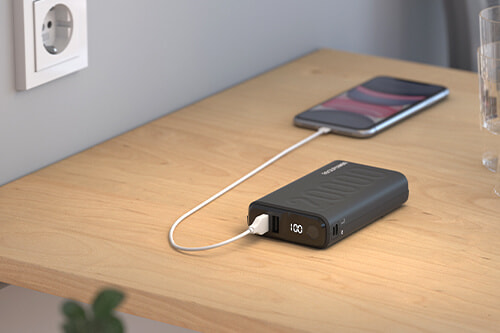
The charging speed of a power bank is a critical factor that directly impacts user experience, and it is determined by a combination of multiple interrelated elements rather than a single parameter. One of the most fundamental factors is the power bank’s output power, which is calculated as the product of output voltage and current (Power = Voltage × Current). Higher output power generally translates to faster charging, but this is only possible when the connected device supports the corresponding power level. For example, a power bank with a 20W output can charge a smartphone that supports 20W fast charging much quicker than a 10W power bank, but if the device only supports 10W charging, the higher output power of the power bank will not be fully utilized, and the charging speed will be limited by the device’s maximum charging capacity.
Another crucial factor is the charging protocol supported by both the power bank and the connected device. Common fast charging protocols include USB-PD, QC (Quick Charge), AFC (Adaptive Fast Charging), and VOOC, among others. These protocols regulate the voltage and current output of the power bank to match the device’s charging needs, ensuring efficient and safe fast charging. If the power bank and the device use incompatible protocols, the charging speed will revert to the standard 5V/2A (10W) or lower, even if both are capable of higher power output. For instance, a power bank that only supports QC 3.0 will not be able to fast-charge a device that relies on USB-PD, resulting in significantly slower charging speeds.
Additionally, the internal components of the power bank, such as the battery cells, charging chip, and circuit board, also play a vital role in determining charging speed. High-quality lithium-ion or lithium-polymer battery cells with low internal resistance can deliver current more efficiently, reducing energy loss during charging. The charging chip, which acts as the "brain" of the power bank, controls the voltage and current output, and a high-performance chip can adjust the charging parameters in real time to optimize speed while protecting the battery. Moreover, factors like ambient temperature can affect charging speed—extreme high or low temperatures will cause the power bank to reduce its output power to prevent overheating or damage, thereby slowing down the charging process. In summary, the charging speed of a power bank is a result of the synergy between output power, charging protocols, internal components, and external environmental conditions.
Be the first to receive our latest news, how-to user guides,
and exclusive deals! Subscribe now.

 Headquarter Address:10F, Building 25, N0. 179 Fengguan, Dongshen Road, Dongguan, Guangdong
 Factory Address:Building 3, Area D, Shengyang Science and Technology Industrial Park, East District of Suichuan County Industrial Park, Ji'an, Jiangxi
 Headquarter Telephone No.:+86 769 2366 8529
Factory Telephone No.:+86 796 6111618
 Contact Person:Kevin Chen
 Email Address:chen@xpower-world.com