 Global layout
 +86 769 2366 8529





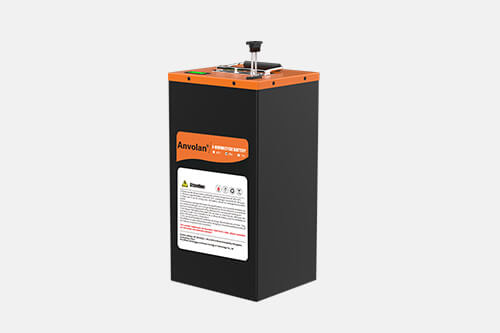
X-Power LiFePO4 batteries for electric tricycles are specially designed for cargo tricycles, passenger tricycles, and low-speed electric vehicles. They feature high energy density, long cycle life, stable power output, and excellent safety performance.
The batteries are built with high-quality Grade A LiFePO4 cells and an intelligent Battery Management System .(BMS) providing comprehensive protection against overcharging, over-discharging, overcurrent, short circuits, and extreme temperatures. Optional communication functions include Bluetooth, CAN, RS485, and UART.
Battery voltage, capacity, dimensions, connectors, and enclosure designs can be customized to match different vehicle models and application requirements. Common voltage options include 48V, 60V, 64V, 72V, and 76.8V, with capacities ranging from 20Ah to 300Ah.
Compared with traditional lead-acid batteries, X-Power lithium batteries are lighter, provide a longer driving range, and offer higher charging efficiency. They help reduce vehicle operating and maintenance costs and are widely used in logistics transportation, market delivery, express delivery, agricultural transportation, and urban short-distance mobility.
| Nominal Voltage | Rated Energy | Humidity | Motor Power |
| 76.8V | 7680Wh | <=80%RH | <3000W |
| Charge Temp. | Discharge Temp. | Max Charge | Continuous Discharge |
| 0-45 C | -20-55 ℃ | 30A | 120A |
| Charge Cut-off | Discharge Cut-off | Storage Temp. | Storage SOC |
| 87.6V | 60V | 0-35 ℃ | 30%-70% |
Why choose us?
SIX CORE ADVANTAGES
01. Automotive-Grade Cells
New LiFePO4 cells, stable structure, high performance and enhanced safety.
02. Six-Layer Intelligent Protection
Overcurrent, overvoltage, balancing, over-temperature,short-circuit and over-discharge protection.
03. Smart BMS Management
Cell-level monitoring and protection for safer, more consistent battery operation.
04. Long Cycle Life
More than 3,000 charge-discharge cycles; typically 6-8 times the cycle life of lead-acid batteries.
05. Bluetooth App Connectivity
View battery status, remaining capacity, cycle count and cell-voltage difference from a mobile phone.
06. Insured After-Sales Support
Product liability insurance coverage up to RMB 20 million,plus extended warranty support.
1. What types of electric tricycles are X-Power batteries suitable for?
X-Power lithium batteries are suitable for cargo tricycles, passenger tricycles, delivery tricycles, agricultural tricycles, food delivery vehicles, express delivery vehicles, and other low-speed electric vehicles.
2. What battery voltages are available?
We commonly manufacture 48V, 60V, 64V, 72V, and 76.8V lithium battery packs. Other voltage configurations can also be customized according to the vehicle motor, controller, and application requirements.
3. What battery capacities can you provide?
Our standard capacity range is from 20Ah to 300Ah. The appropriate capacity depends on the required driving range, motor power, vehicle load, installation space, and working conditions.
4. Can the battery size and enclosure be customized?
Yes. Battery dimensions, enclosure materials, mounting structure, handles, connectors, charging ports, discharge ports, and cable positions can all be customized to fit different electric tricycle models.
5. What type of battery cells do you use?
We use high-quality Grade A LiFePO4 cells from reliable cell manufacturers. The cell brand and specification can be selected according to the customer’s performance requirements, budget, discharge current, and expected cycle life.
6. What protection functions does the BMS provide?
The intelligent BMS provides protection against overcharging, over-discharging, overcurrent, short circuits, and high or low temperatures. Optional functions include active balancing, Bluetooth monitoring, CAN, RS485, and UART communication.
7. How long is the cycle life of the battery?
Under proper charging, discharging, and operating conditions, our LiFePO4 batteries can typically achieve more than 2,000 charge and discharge cycles. The actual service life depends on the depth of discharge, temperature, charging method, and daily usage.
8. How far can an electric tricycle travel on one charge?
The driving range depends on the battery capacity, motor power, vehicle load, road conditions, driving speed, tire pressure, and ambient temperature. Our engineering team can recommend a suitable battery solution based on the customer’s target range.
9. Can the battery support high-current discharge?
Yes. We can configure the battery with a suitable discharge rate and BMS current according to the motor power and controller current. Continuous and peak discharge currents will be confirmed during the battery solution design process.
10. How long does it take to fully charge the battery?
Charging time depends on the battery capacity and charger current. Most electric tricycle batteries can be fully charged within approximately 4 to 8 hours. Faster charging solutions are also available when compatible cells and charging systems are selected.
11. Can I replace a lead-acid battery with an X-Power lithium battery?
Yes. In many applications, our lithium batteries can replace traditional lead-acid batteries. However, the voltage, installation dimensions, connector type, controller, and charger must be checked before replacement.
12. Is a special lithium battery charger required?
Yes. A charger with the correct voltage, charging current, and charging profile must be used. We can provide a matching charger together with the battery pack.
13. Are X-Power batteries waterproof?
Water-resistant or IP-rated enclosure designs are available according to project requirements. The final protection level depends on the enclosure structure, connectors, sealing method, and installation environment.
14. What certifications and documents can you provide?
Depending on the project and destination market, we can provide documents such as UN38.3, MSDS, CE, and RoHS. Additional testing or certification requirements can be discussed before production.
15. Do you support OEM and ODM services?
Yes. X-Power provides OEM and ODM services, including customized voltage, capacity, dimensions, enclosure, connectors, labels, logos, BMS parameters, communication protocols, packaging, and product documentation.
16. What information is required for a customized battery solution?
Please provide the vehicle voltage, motor power, controller current, required driving range, maximum load, battery compartment dimensions, connector type, communication requirements, target quantity, and destination market.
17. Do you test every battery before shipment?
Yes. Each battery pack undergoes cell inspection, capacity testing, charge and discharge testing, BMS protection testing, insulation testing, and aging testing before shipment.
18. What is the minimum order quantity?
The minimum order quantity depends on the battery specification and customization requirements. Sample orders are available for testing and vehicle compatibility evaluation.
19. What is the production lead time?
The lead time depends on the order quantity, cell availability, enclosure design, and customization requirements. Standard models generally have a shorter production time than fully customized battery packs.
20. How should the battery be stored when not in use?
The battery should be stored in a cool, dry, and well-ventilated environment at approximately 40% to 80% state of charge. It is recommended to check and recharge the battery every three to six months during long-term storage.
Be the first to receive our latest news, how-to user guides,
and exclusive deals! Subscribe now.

 Headquarter Address:10F, Building 25, N0. 179 Fengguan, Dongshen Road, Dongguan, Guangdong
 Factory Address:Building 3, Area D, Shengyang Science and Technology Industrial Park, East District of Suichuan County Industrial Park, Ji'an, Jiangxi
 Headquarter Telephone No.:+86 769 2366 8529
Factory Telephone No.:+86 796 6111618
 Contact Person:Kevin Chen
 Email Address:chen@xpower-world.com














 Chat Now